



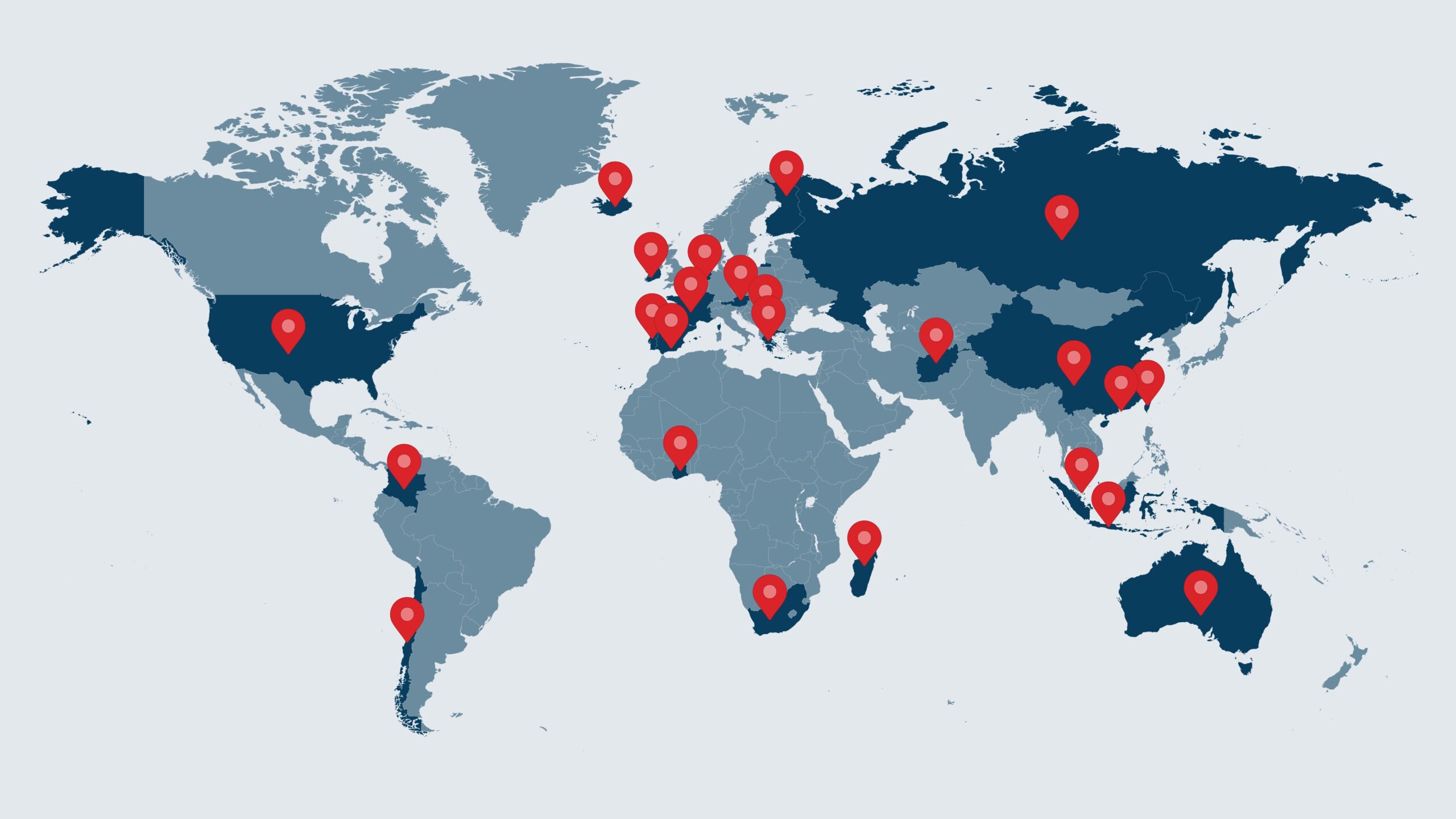
Morning everyone. It’s been a crazy couple of weeks in global higher education, with a lot of countries dealing with very similar issues. I’m not just talking about the canvas hack here: we also have a lot of action on culling academic programs and dealing with issues in student dormitories. But this edition also touches on universities for sale in Finland, student aid disasters in South Africa, spy schools in Russia, fake philology awards in France, a very interesting rector’s election in Chile – and more! Buckle up.
- Let’s start in Wellington, where New Zealand’s right-wing National Party government has done away with the country’s Free Fees policy. The policy, which was initially a “free first year” policy, was introduced by Jacinda Ardern’s Labour government in 2018. The idea was initially to add another free year after every election, but when early results showed almost no broadening of participation, Labour decided to stop expanding the program. When the National Party returned to power in 2024, they altered the policy so it was a free final year program, which made no sense at all. Now, just ahead of an election in November, and on the heels of another study saying the access effect of the policy is basically bupkis, they have eliminated the program altogether. The Greens say they will bring the program back; Labour, led by former education Minister Chris Hipkins, is staying quiet on the matter.
- There have been a whole bunch of stories this past fortnight about university dorms. In Taiwan, students made the news for calling for an end to dormitory curfews. In Thessalonika, violence broke out during protests over a new initiative that bans students from transferring their leases, having overnight guests and consuming alcohol in open areas. In West Africa, the state rent control department is going after exorbitant hostel fees at the University of Ghana, while on the other side of the continent in Madagascar, it is the sub-standard nature of student housing which has made the news.
- Similarly, there were a spate of stories this week about universities as meal providers for students. France’s 1 euro per meal scheme for students through its national student service provider CROUS, announced several months ago, finally went into effect this month. In Austria, the government has introduced a program of “warm and balanced” lunches for five euros. In Ethiopia, the national government is effectively nationalizing university cafeterias. Meanwhile, in Java, the rector of the Islamic University of Yogyakarta is resisting setting up a cafeteria on campus because he thinks universities becoming service providers detracts from their educational mission.
- In Russia, documents have come to light showing how Bauman University, a highly prestigious technical school just outside Moscow, has also for a number of years hosted a secret facility run by the country’s Military Intelligence to teach hacking and election meddling.
- There’s a fascinating story developing in Finland where shares in a trio of Polytechnics/Universities of Applied Sciences with declining enrolments have been made available for sale by their respective owners – that is, their municipal governments. This has set off a bidding war between the University of Eastern Finland and the Finnish Association of Engineers, the latter of whom believe a university buy-out of a polytechnic would be calamitous.
- The Government of Serbia, having been locked in conflict both with students and the academic community as a whole for the past 18 months, has taken a new tack in its confrontation with universities. Allying itself with the Serbian Orthodox church, it has decided to fund a new Church-sponsored institution to be named St. Sava university.
- While most of the world’s attention has been fixed on the war in the Gulf, the latest military atrocity on a university campus took place a thousand miles to the East in Afghanistan on April 27th, where the Pakistani military bombed the campus of Sayed Jamaluddin Afghani University. The attack killed 7 and injured 75, with 30 of these known to be students.
- A couple of big stories about artificial intelligence emerged from big American universities in the past couple of weeks. At the University of Southern California, a benefactor who made his money from AI chip manufacturer NVIDIA has donated $200 million to the institution so that it can “apply artificial intelligence across academic disciplines”. Meanwhile, Arizona State University rolled out an AI agent called “Atomic” which generates educational text and video modules based on video clips of instructors’ lectures. The problem was that the initiative wasn’t explained clearly to instructors themselves, who were annoyed both at the intellectual property implications and the way their material became AI slop.
- Globally, of course, the truly big IT story was the hack of the Learning management platform Canvas by the ShinyHunters hacking group, which stole something on the order of 3.5 terabytes of data, including much student personal data. Apart from Canada and the US, the canvas outage affected schools in Australia, Hong Kong, Iceland, Ireland, the Netherlands, New Zealand, Portugal, Singapore, Spain, and South Africa (I am probably missing some here). Instructure, the company which owns Canvas, paid the hackers a ransom this week, and in theory the data is now safe and sound, but nevertheless the event kicked off a worldwide discussion about institutional data security and data sovereignty. As it happens, Dutch universities were just about to convene a group on digital autonomy and how to lessen their universities’ dependence on American platforms.
- In South Africa, the National Student Financial Aid Scheme (NSFAS) has been placed under government administration after an escalating series of administrative and governance failures. In late April, police uncovered a fairly large fraud ring that was stealing money from NSFAS; at around the same time it became evident that something like US$40M in payments for students in TVET programs had been delayed. A spate of Board resignations followed, at which point the Higher Education Minister, Buti Manamela, simply replaced the Board with an administrator. This is the third time in eight years that the scheme – which is deeply unpopular within government for its inability to do its (admittedly almost impossible) job of keeping both students happy and universities solvent – has been placed under administration; radical surgery and a new institutional home for student aid seems likely.
- A number of countries have begun a process of culling programs of study at a national level. Indonesia, for instance, wants to close programs that “do not serve future needs”. This has produced some interesting guess work about which kinds of programs might be facing the axe (mainly business rather than humanities, though the government does seem to be indicating that it does not wish to open any new humanities programs). It has also created some pushback, requiring the government to backpedal a bit and emphasize that not all needs are strictly economic in nature. Kazakh universities have also been told to prepare to cut 700 programs, though the actual list of programs to be cut seems to have not yet been made public. All this on the tail of China putting a number of Humanities and Social Science programs on ice last month because of fears they will be irrelevant in a world of AI.
- Back in the United States, the University of Tennessee’s Robert Kelchen, using a very unique data set, has done some extremely cool work on how and where different types of institutions cut their budgets when revenue is shrinking. The quick answer: both academic spending and central administration spending take the biggest hits; athletics, research administration and development (i.e. fundraising) were least likely to be cut. More tantalizingly, he suggests that there may be differences in how cuts occur under centralized budgeting models vs. those where Deans and department Chairs are in charge.
- The race for the rectorship is getting hot at U de Chile in Santiago. Candidates are debating each other on YouTube and giving big interviews to the press. Two of the key issues are i) how to deal with the right-wing government of José Antonio Kast and ii) how to amend the University’s arms-length relationship with the professional football team which shares the university’s name. American readers, take note!
- In Colombia, the government of Gustavo Petro has conducted a long-running feud with the country’s private universities, culminating a few months ago in the imposition of an asset tax on these institutions. The courts, however, have decided to suspend the implementation of the tax pending a final ruling later this year. It is unclear if taxes already paid will be refunded.
- And finally, my favourite story of the past two weeks comes from France, where a philology professor with a fake degree from a fake American university apparently invented an international society for philology, designed a prestigious award for philology, and awarded it to himself at a lavish ceremony in Paris, thus raising his prestige and employment prospects considerably. I am unsure what is crazier: that story or the fact that it took ten years to discover the fraud.
That’s all for now. See you back here in two weeks.