






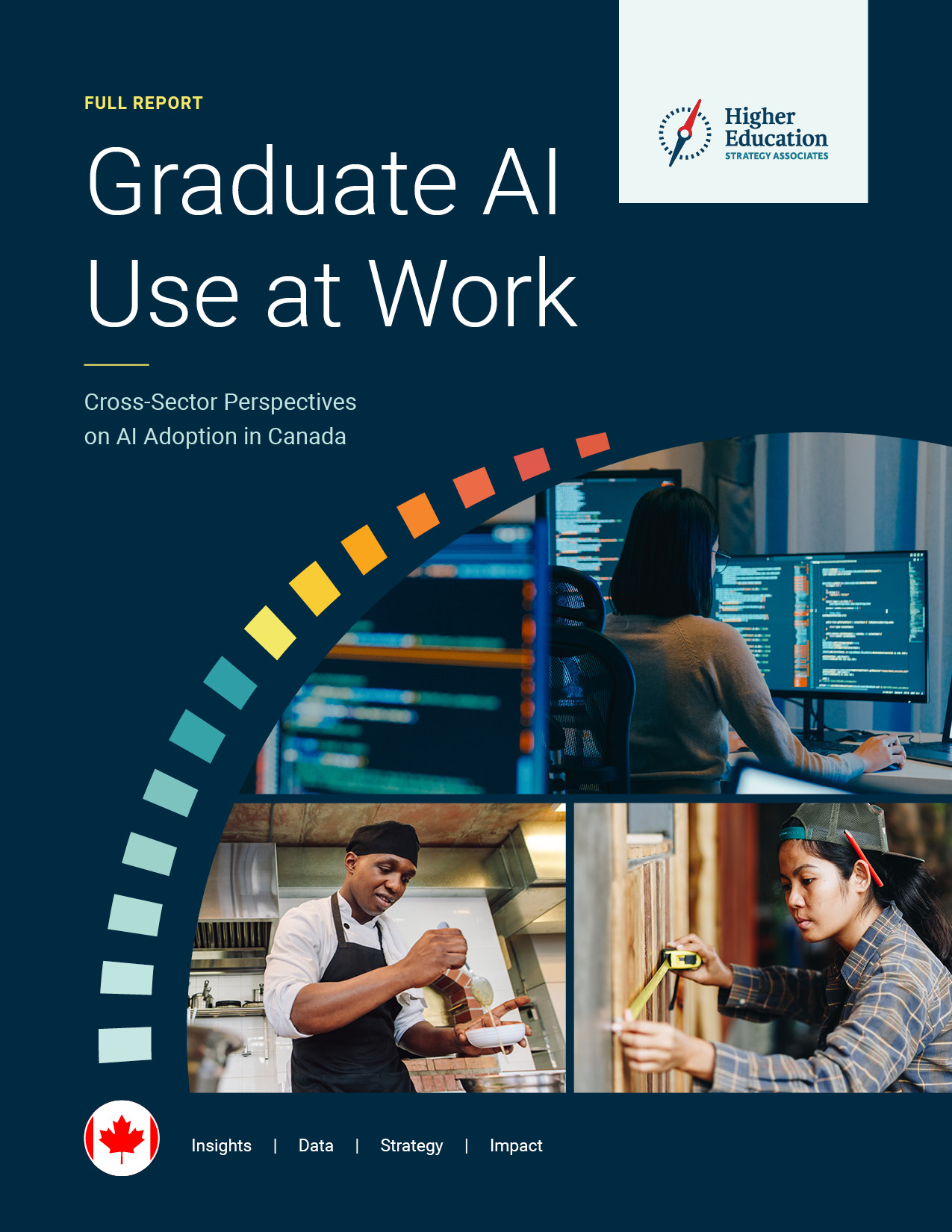
Graduate AI Use at Work
Findings from a national survey of Canadian college and university graduates
A Tool, Not a Crutch: Preparing Students for an AI-Enabled World
Higher Education Strategy Associates surveyed 2,000+ college and university graduates to understand how AI is actually being used in Canadian workplaces. The findings challenge a number of assumptions that are currently shaping institutional AI strategies.
Many graduates are using AI in predictable ways—to speed up or augment their work—but a minority of early adopters are coming up with creative uses tied to their careers. Most are navigating AI use independently, with limited direction from employers, and feel the next generation that enters a labour market needs guidance. They have many suggestions for what and how colleges and universities should be teaching.
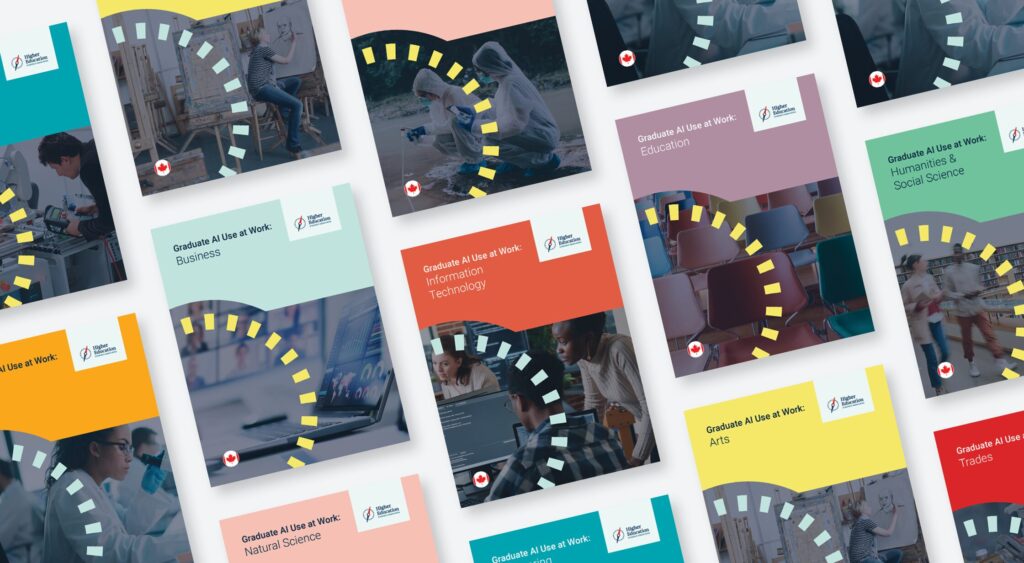
The report organises findings by field of study helping institutions explore how AI use, expectations, and workplace applications vary across graduates trained in different disciplines. For institutions currently shaping AI strategy, curriculum reform, or thinking about how they can prepare graduates for their careers, the report offers evidence that helps move conversations from assumption to grounded insight.
Why Institutions Are Engaging With This Research:
- HESA provides a snapshot of how graduates from different fields are actually using AI differently at work.
- The findings can practically inform institutional AI strategy.
- Graduates had opportunities to explain creative and unexpected uses for AI in their own words.
- The findings show what graduates think institutions should be prioritising—which sometimes differ from what we see prioritised in policy documents.
- The insights can support curriculum review, senate discussions, academic planning, and leadership retreats.
Table of Figures
- Any AI use in the last month, by most common broad occupation
- Any AI use in the last month, by TEER
- Creative uses of AI
- Use of AI for sales
- Use of AI in analysis
- Use of AI for automation
- Employer positions on AI use
- Platforms used in the past month
- Most common priorities for personal skill development
Interested in learning more?
Please fill out the form below to receive more information about our Graduate AI Use at Work reports and pricing, or to place a preorder.
Reports will be available June 2026.