








Data with Purpose
Smart data. Strategic action.
Why Partner
Higher Education Strategy Associates (HESA) and Plaid Analytics (Plaid) are joining forces for a timely collaboration, combining deep sector strategy with advanced analytics. Each brings distinct strengths—HESA in strategy, policy and institutional advising, Plaid in data systems, automation and prediction—and together, we offer trusted, integrated solutions that neither could deliver alone. We offer budget-conscious services such as data mapping, diagnostics, custom solutions, and strategic enrolment management support.
We know institutions are not suffering from a lack of data—they are struggling to transform it into decisions. Whether it is unlocking siloed systems, aligning data with board or leadership-level questions, or ensuring that analytics programs reflect institutional priorities, HESA x Plaid is positioned to help postsecondary leaders move from complexity to clarity.
This joint venture is deliberately designed to meet the moment: helping postsecondary institutions navigate complexity with smarter tools, clearer insights, and more data-informed decision-making.
A peer cohort for higher education leaders
Smart Data: The Decision Advantage
From reporting to decisions.
Smart Data is for provosts, vice-presidents and the senior teams they rely on — the people responsible for an institution’s most consequential decisions: which programs to protect or sunset, what to tell the board about next year’s enrolment, whether to trust the numbers a strategy is built on. It’s built for the postsecondary leader who has no shortage of reports but not enough confidence in the numbers to make the most strategic decision.
The financial ground has shifted beneath the sector, and the cost of a wrong decision has risen with it. New international student arrivals fell roughly 60% in 2025, and federal permit forecasts[1] have repeatedly overstated actual approvals[2]. A few provinces have added funding, but for most institutions it offsets only a fraction of the revenue lost[3]. Nationally, provincial transfers in 2023–24 remained below their level five and ten years earlier in real terms, while costs continued to rise[4]. Total student numbers similarly declined, but over a longer horizon: Canadian colleges have already experienced a drop of about 60% while universities will take about six years to reach similar decreases[5]. For many institutions, the difference between thriving and declining increasingly depends on getting these getting these strategic decisions right.
- "Most institutions are not short on reports. They are short on the confidence to act on them."
Smart Data is a peer cohort and learning program from Higher Education Strategy Associates and Plaid Analytics designed to equip institutions to make better decisions informed by trusted data. Over a series of virtual sessions, senior leaders alongside peers facing similar challenges, will work through the questions, trade-offs, and decisions that good data should inform: forecasting under the caps, institutional strategy, program viability, governance, and AI readiness.
Each session pairs a real data issue and topic with closed-door peer discussion under Chatham House Rule, so leaders can speak candidly about what is and is not working inside their own institution to learn from one another.
What leaders can do differently
Defend a consequential decision before the board — whether an enrolment forecast, a program investment or a difficult reallocation — with data leaders understand and can stand behind.
Respond more quickly to changing internal and external conditions by moving beyond manual processes and infrequent reporting cycles, and by connecting data across decentralized functions, from recruitment and admissions to enrolment planning.
Assess program viability across the full lifecycle — from identifying new opportunities to deciding when a program should be redesigned, consolidated or sunset.
Evaluate AI proposals or data sharing requests with a clear understanding of the associated strategic, privacy and security implications, including alignment with rapidly evolving institutional policies and FIPPA or FOIP requirements.
Nine working sessions
The Curriculum
Nine working sessions move from the decisions under the most pressure to the connective work — governance, systems, culture — that makes good decisions possible over time. Each session blends structured input from HESA and Plaid, candid peer discussion, and the occasional outside case study or guest perspective.
Deciding Under Uncertainty
01
Enrolment in an era of uncertainty
Scenario planning over single-number forecasts.
02
Program viability & reallocation
How to decide what to keep, grow, scale back or sunset, and how to track performance over time.
Governance, Trust & AI
03
AI governance & risk
Privacy, shadow AI, and auditability; readiness before opportunity.
04
Governance that works
Operational enablement through live metadata, clear ownership, and data lineage you can trust.
05
Who counts?
What is a student? An employee? A course? Definitions, institutional truth, and the cost of inconsistency.
From Data to Strategic Decisions
06
Smart questions first
Defining the decision before collecting the data. Why are you collecting data – what questions are you trying to answer?
07
Making the case
Turning analysis into an argument that the Board, Senate and deans will act on.
08
Beyond the dashboard
Scenario-aware and conversational analytics.
09
From data to strategy
Aligning data work with institutional direction.
Investment
The Model
Smart Data is offered through an institutional membership at $9,000 per institution: nine working sessions launching in Fall 2026, plus a data-readiness self-assessment, guest contributors, and two synthesis briefs. Institutions may designate a team of up to five senior leaders so that the cohort builds shared judgment inside each institution, along with cross-institutional sharing. Institutional teams may include leaders from portfolios like Provost, Vice Presidents, CIO, strategy leaders, registrar, institutional research, enrolment, and finance.
Sessions
Launch
Price
9 working sessions
Fall 2026
$9,000 per institution
Get in Touch
Interested in joining the founding cohort or exploring whether Smart Data is a fit for your institution?
HESA x PLAID
Joint Service Offerings
HESA and Plaid offer a variety of custom engagement approaches that help institutional leaders identify data challenges, map solutions, and implement custom tools that bridge the gap between insight and action. Our offerings range from diagnostics and data mapping to tailored integrations, strategic enrolment supports, and leadership-focused analytics frameworks designed to fit the needs of each institution.
Strategic Discovery & Data Mapping
Discover where small changes will make big impacts. Two days of on-campus interviews to identify critical information bottlenecks that hinder strategic decision-making, concluding with a report on quick wins and key focus areas for growth. Get clarity on what your decision-makers need for data products, and how to develop them.
HESA x Plaid will send two senior advisors for a two-day campus visit, conducting up to 8-10 interviews with leaders and key data custodians.
We’ll help you:
- Clarify the institutions most pressing strategic or operational data needs
- Identify where the flow of information and data gets bogged down
- Understand what your data stewards need to share and use information effectively
What you get:
- A high-level graphic map that helps you visualize key data flows, identify blockages, and explore possible pathways to streamline data transfer and analytics refreshes
- A recommendation summary with a prioritized list of immediate opportunities to help you use your current systems to their fullest and identifies key areas where a little change can make a big impact.
Who you are:
- New to a leadership role or new to a university and looking to get a quick start on understanding your role, the institution, and making positive change.
- Provosts, President, Chief Information Officer, Directors, and Executives
Tailored Solutions & Implementation
A full-scale assessment and implementation plan designed to meet specific goals, whether you’re launching a new data initiative, need new dashboards showcasing your strategic or academic plans KPIs, or looking to modernize your reporting or survey approaches.
Institutions often face persistent data challenges that limit their ability to act quickly with fragmented systems, long timelines, inconsistent reporting processes, and limited visibility into real-time performance. HESA x Plaid offers custom-built technical solutions to help institutions overcome these barriers and enable data-informed decision-making at every level. Get expert help to design and implement tailored data engineering, system integration, and analytics infrastructure that support your strategic endeavours.
Examples include:
- Building dashboards for predictive analytics or operational forecasting
- Creating interfaces that provide real-time insights for leaders and analysts
- Connecting siloed data systems to enable more consistent and automated reporting
- Reporting data warehouses that bring together disparate data sources
- Survey design and analysis
Deep Dive Diagnostics
We dive deep into one area of focus with a review of key documents, and a day of on-campus interviews with key staff to identify key pain points in information processing, data analysis and dissemination in your department, faculty, or office. Our report will give you achievable recommendations and the evidence you need to win executive support to implement change.
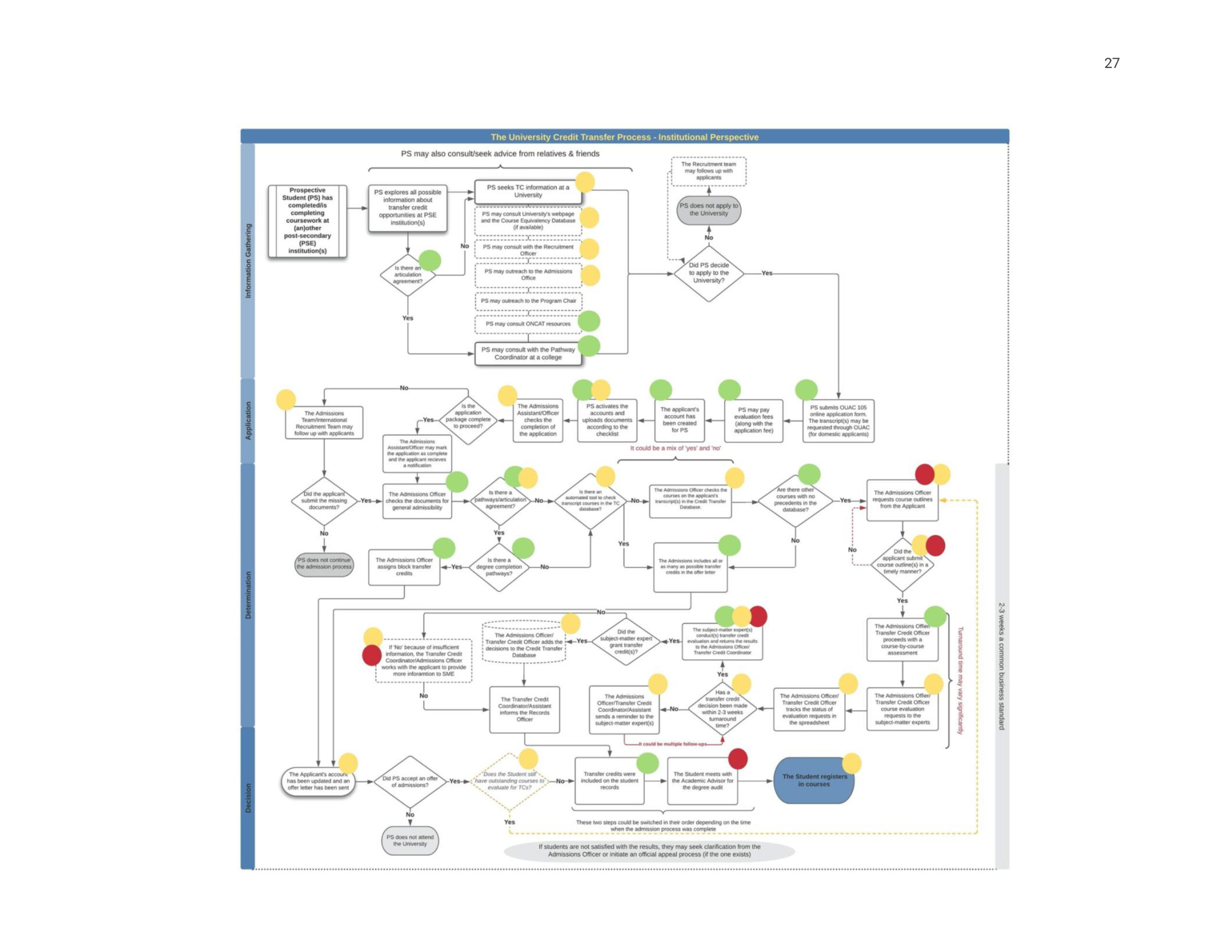
The Ontario Council for Articulation and Transfer (ONCAT) commissioned HESA to undertake an exercise with 25+ Ontario post-secondary institutions (over several years) to help colleges and universities identify strengths in their transfer credit processes / data platforms, and most especially areas for improvement. HESA engaged in deep dive diagnostics to map the transfer credit processes, flow and data platforms across these institutions.
The project, which has rolled out in phases as new institutions come aboard, draws on the expertise of administrative staff and clear process maps to visualize pathways, identify pain points, and develop recommendations. The student perspective is also included through both surveys and focus groups. The outcome is an evolving project that is gradually streamlining credit transfer processes for colleges and universities across Ontario, and shares best practices across the post-secondary system.
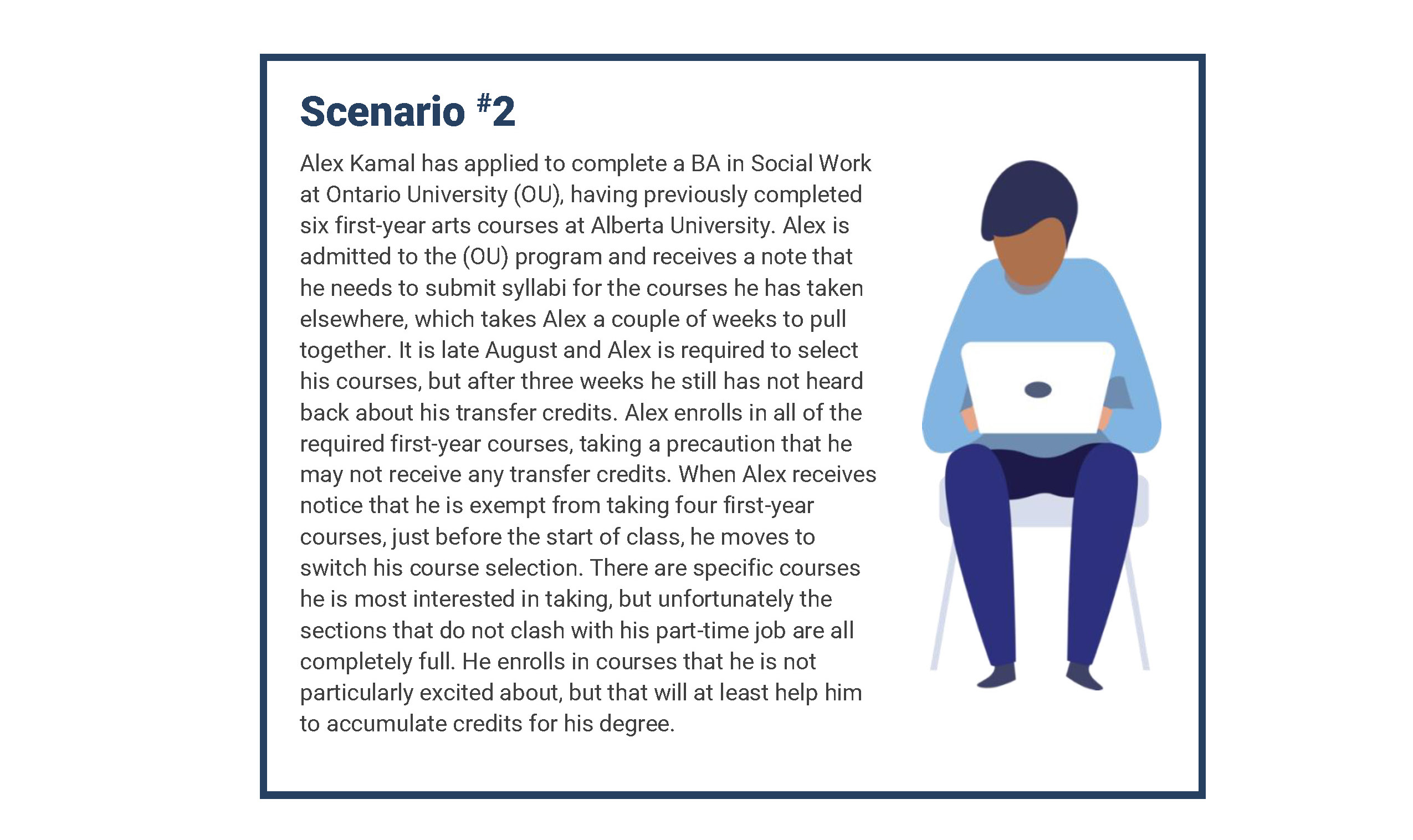
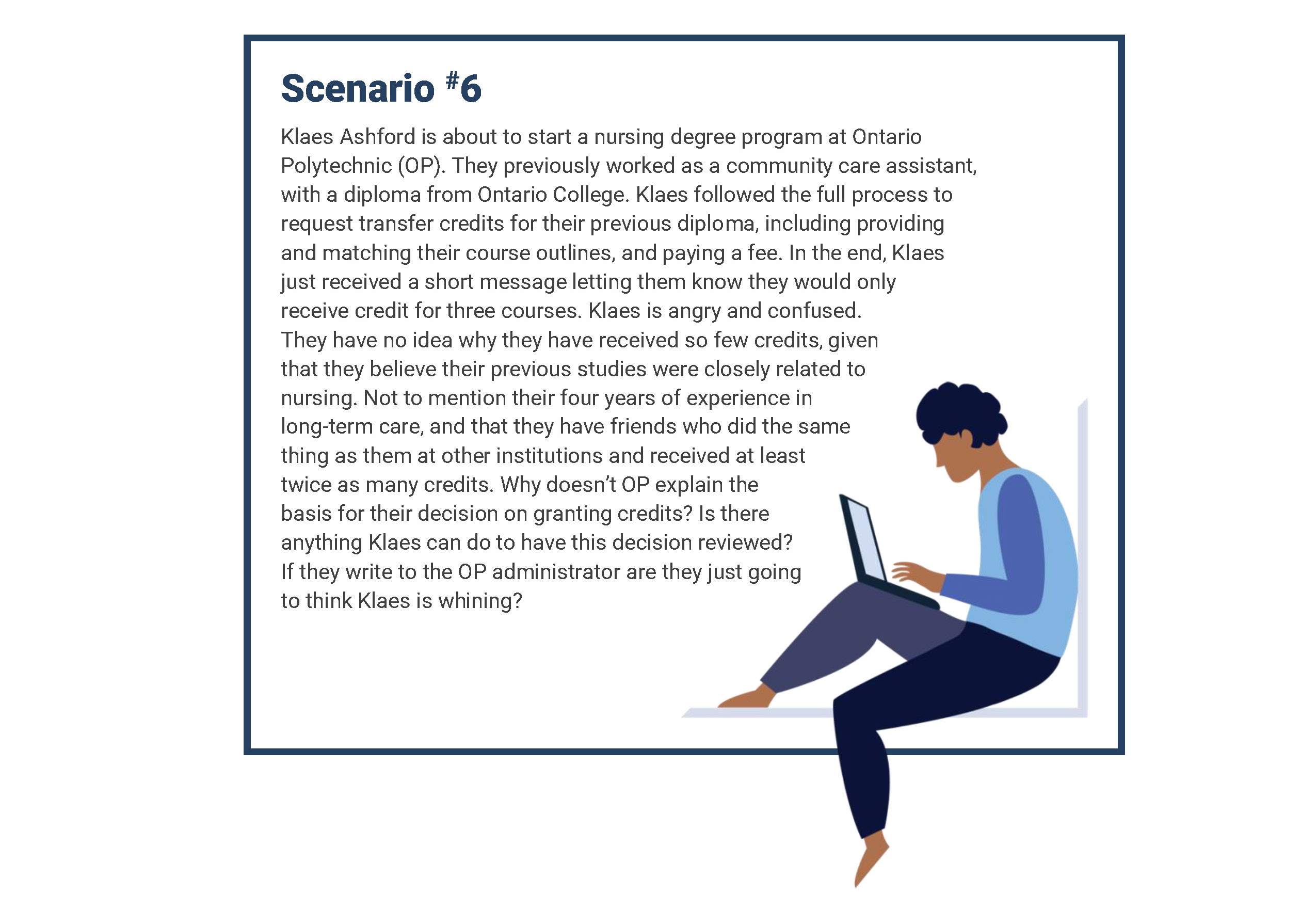
Each institution was provided with a summary report of findings, along with a series of working scenarios and detailed Transfer Credit Process Maps. You can learn more about this work here. Below is a model for the kind of scenario-based process mapping that helps clients identify and fix problems in information flow.
We work with department leads and office managers who know their processes can improve but aren’t sure what to do first and need to present a formal plan to their leadership to garner leadership support and budget approval to execute it. We help by:
- Interviewing your data analysts, information clerks, and IT teams to identify specific roadblocks in your systems, and struggles with data entry, data transformation, and access management tasks.
- Providing best practices, technology and data solution recommended actions, and background evidence and materials so you can provide return on investment arguments to your stakeholders
What you’ll get:
- Deep Dive Diagnostics Summary and Best Practices report of findings
- 5 to 10 key recommendations and actions
Who you are:
- Registrars, Institutional Research Managers, Faculty Deans, Student and Support Service Area Managers; Public Service and independent organizations supporting Higher Education at a jurisdictional level.
Strategic Enrolment Management (SEM)
From full-scale institutional SEM plans to faculty-specific strategic initiative mapping, HESA x Plaid helps you bring out the best of your teams and tools for strategic planning and action. We help you gather and synthesize the information to contextualize student enrolment and program demand with tuition impacts, operations, and financial planning, to set goals and take action to prepare for any future.
In 2022, HESA developed a new SEM framework for a major university which moved beyond recruitment to consider factors during retention and alumni engagement. We considered how the university could build a diverse and sustainable student body, recognizing that wraparound support services contribute to student retention. Retaining students both helps individuals to succeed and helps maintain a healthy and diverse community. We worked to put equity, diversity and inclusion front and centre.
The new SEM structures helped streamline SEM administration within a complex university and focus attention on issues on which it is desirable to engage faculty, such as enhancing student experience.
From full-scale institutional SEM plans to faculty-specific strategic initiative mapping, HESA x Plaid helps you bring out the best of your teams and tools for strategic planning and action. Whether you’re working on a full-scale institutional SEM plan or a faculty-level enrolment plan, we help you develop a plan that is forward-thinking, analytically sound, evidence-based, practical, goal-oriented and achievable by:
- Providing guidance on aligning SEM strategy with institutional priorities, objectives and resources realities
- Moving EM from siloed recruitment and retention efforts to integrated SEM strategies
- Designing governance and operational models that align decision-making across academic and administrative units
- Developing analytics frameworks to understand what drives student success, persistence, and long-term engagement
- Designing smart dashboards, integrated reporting tools, and predictive models to support data-informed SEM strategy
- Performing on campus interviews, reviewing past plans, reports and progress, market and demand analysis, and a data governance and analytics review
What you’ll get:
A tailored professional strategic enrolment management plan that is informed by and leverages your institutional data, reflective of your institutional mission and values, and shaped to respond to current and emerging industry challenges.
Who you are:
Directors: International Education, Advising, Distance or Online Education, Institutional Research; Strategic Planners and Enrolment Managers; Academic & Faculty Deans; Registrars
A Selection of our Prior Engagements





Partnership
Why HESA x Plaid?
HESA x Plaid engagements help surface actionable insights, advance innovation in practical ways, and maximize the value of existing data investments. Leadership teams gain external perspective while maintaining control over priorities, change efforts, and internal capacity building.
HESA’s strength in academic strategy and alignment complements Plaid’s reputation for fast, reliable, and actionable analytics. Both teams are future-focused, collaborative, and committed to practical solutions that help institutions adapt with confidence and unlock their full potential. Together, HESA and Plaid offer something institutions urgently need: a trusted bridge between insight and action.
Each engagement is designed to fit the institution’s scope, budget, and timeline, providing a structured pathway from diagnosis to delivery.
Why we chose to partner
We partnered with HESA because Canadian higher education needs bold, coordinated solutions.
- “Our shared belief in higher education as a force for transforming lives, communities, and the country brought us together. We’ve long admired the work of Alex Usher and the HESA team, and this partnership powers insights and impact in ways we once only imagined, at a time of immense change. We’re thrilled to team up with Canada’s leader in higher ed strategy, and bring our advanced data processes and predictive models to help more institutions confidently chart their future.”
- Andrew Drinkwater & Patrick Lougheed | Founders, Plaid Analytics
Let's start a conversation
If your institution is working to improve enrolment strategy, address data challenges, or strengthen decision-making, we would be pleased to discuss how HESA x Plaid can support your efforts.

Learn more about Plaid
Plaid Analytics empowers Strategic Enrolment Management (SEM) with enrolment & tuition forecasting, automated data pipelines, and data governance to ensure your staff can access decision support data accurately and securely. What we do is based on creating data insight, but how we do it begins with first understanding what you want to achieve, how you are currently working with your information, and the people behind the data. We work to bridge the gaps with solutions customized to your needs, providing you with the tools and techniques you need to achieve your goals.
[1] Study permit holders and 2026 issuance targets: IRCC, 2026 provincial and territorial allocations under the international student cap (November 25, 2025).
Decline in new student arrivals: IRCC, 2025 Annual Report to Parliament on Immigration (2026–2028 Levels Plan annex).
[2] New study permit approvals versus IRCC forecasts, 2024–2025: Office of the Auditor General of Canada, International Student Program Reforms (2026).
[3] Ontario’s four-year, $6.4-billion postsecondary funding commitment, announced February 2026: Government of Ontario.
[4] Usher, A., Balfour, J. & Jeon, J. (2025). The State of Postsecondary Education in Canada, 2025. Toronto: Higher Education Strategy Associates.
[5] Usher, A., Jeon, J. & Balfour, J. (2026). The State of Postsecondary Education in Canada, 2026 [blog]: https://higheredstrategy.com/the-state-of-post-secondary-education-in-canada-2026/