





Morning all. This week, I am doing a thing on institutional autonomy in Canada, using the European University Association’s Autonomy Scorecard methodology as a basis to compare institutional autonomy in four dimensions (organizational, financial, staffing, and academic) across Canada – and eventually with Europe as well. Yesterday, I explained the details of the project, the EUA’s methodology and the small variations I introduced to make the project work in Canada, and scored provinces on the dimension of organizational autonomy. Today, I am going to score provinces on the other three dimensions before making full cross-provincial and international comparisons tomorrow.
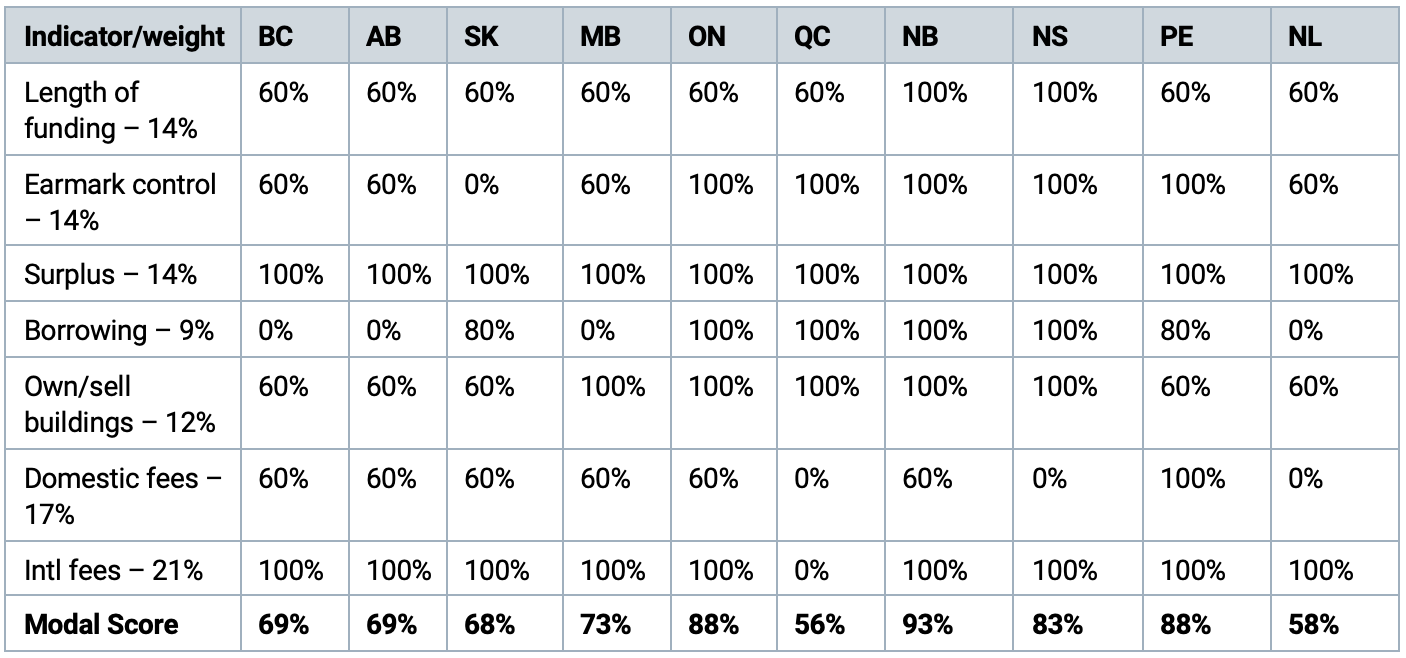
Let’s start with financial autonomy. The EUA scores countries based on seven indicators: i) length of public funding cycles, ii) “type” of public funding (the degree to which institutions have autonomy to use public funds or, alternatively, the degree to which governments can control or earmark institutional spending, iii) the ability to carry surpluses over from year-to-year, iv) the ability to borrow money, v) the ability to own and sell buildings, and the degree of freedom institutions have to set vi) domestic and vii) international tuition fees. Table 1 shows how the provinces compare on these indicators.
Table 1: Financial Autonomy Scores by Province
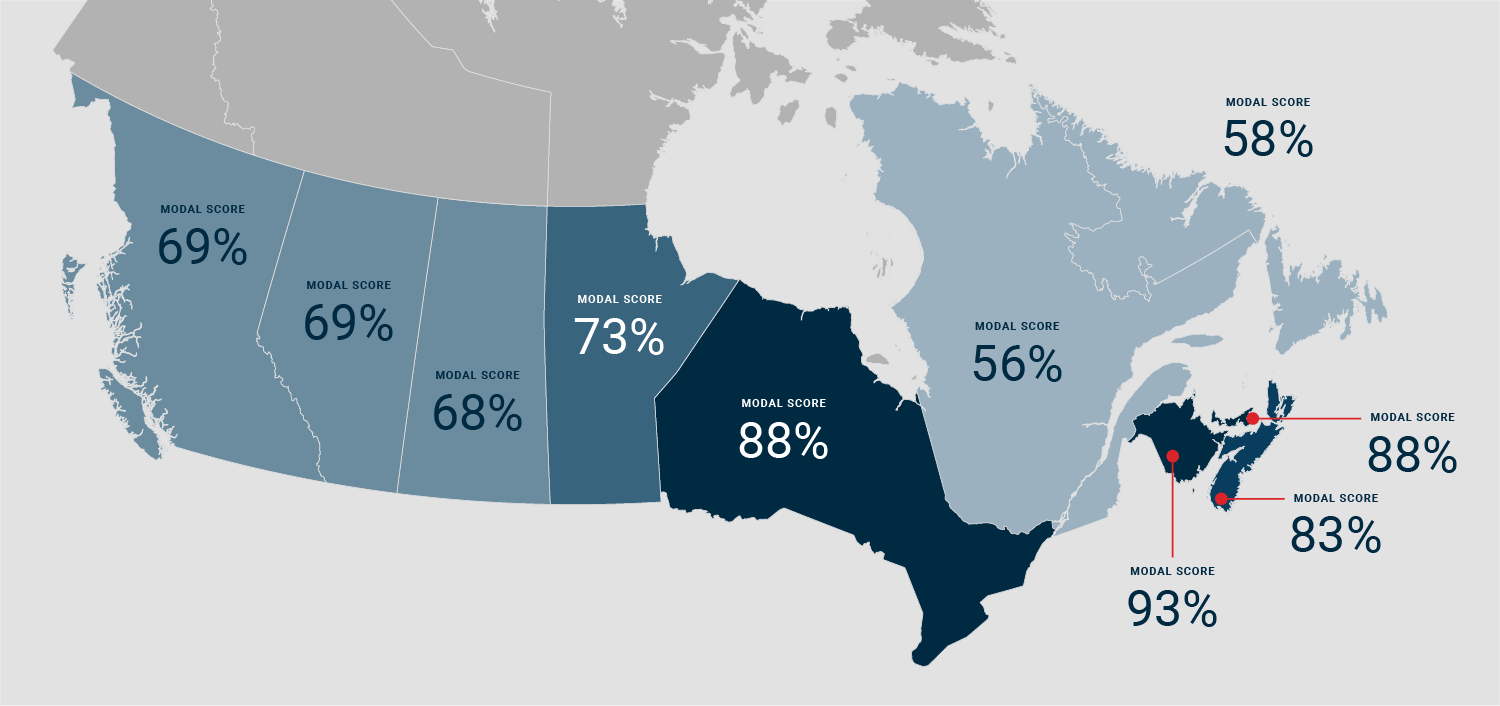
There are some pretty significant variations here by province: New Brunswick scores 93%, while Newfoundland and Quebec are in the mid/high fifties. In between, the four western provinces tend to be on the lower end of that spectrum, while Ontario, Nova Scotia and PEI are towards the higher end.
A few notes here. With respect to length of funding, NB and NS get higher marks because governments have multi-year MOUs with their institutions. With respect to earmark control, Saskatchewan gets a (perhaps unfairly) harsh score, because both U Regina and U Saskatchewan have wording in their legislation that states “the board shall not incur any liability or make any expenditure that will, in the opinion of the minister, impair the financial status of the university unless an estimate… has first been approved in writing by the minister.” As far as I know, this clause isn’t ever used, but it’s there. On the issue of surplus: all institutions can keep them; this is not an issue in Canada. Borrowing is a different story – four provinces prohibit universities from presenting deficit budgets, while two others put other forms of limits on institutional borrowing. Institutions can also all own buildings and land – but many cannot sell them without government approval. On domestic tuition, three provinces have tuition freezes and six others have caps – PEI is the only province where the university has freedom to set fees (though, as you can imagine, this is a freedom it uses quite cautiously). As for international students, all provinces allow institutions to charge what they want; however, in Quebec, there is an effective cap because of the claw-back rate the provincial government has placed on international tuition fees since 2023.
Now, on to the staffing autonomy dimension. The EUA methodology scores countries on four criteria: institutions’ capacity to decide on recruitment processes, salaries, dismissals of senior staff, and promotion of all staff. There is no need for me to include a table because nine provinces score 100% on all indicators (a feat only two European managed to achieve) while British Columbia scores a 96% because of the way the province imposes collective bargaining mandates on universities.
Finally, there is the academic autonomy dimension. EUA scores this according to the following indicators: i) the freedom to decide on overall student numbers, ii) the freedom to select students, iii) the capacity to introduce and iv) terminate programs, v) the freedom to choose the language of instruction, the freedom to select vi) quality assurance mechanisms (specifically, program-level vs. institutional level) and vii) quality assurance providers, and viii) the capacity to design content of degree programs of non-regulated programs. Table 2 shows how the provinces compare on these measures.
Table 2: Academic Autonomy Scores by Province
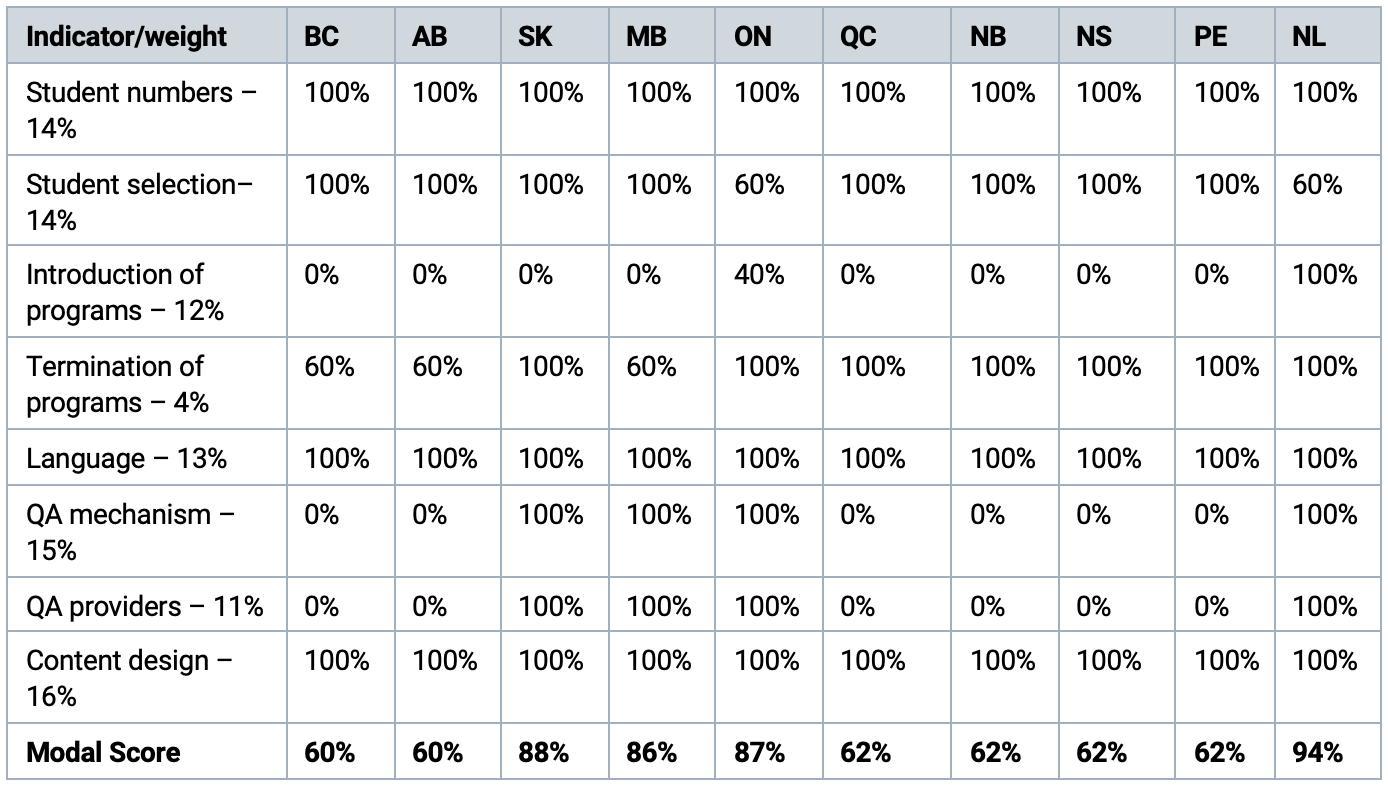
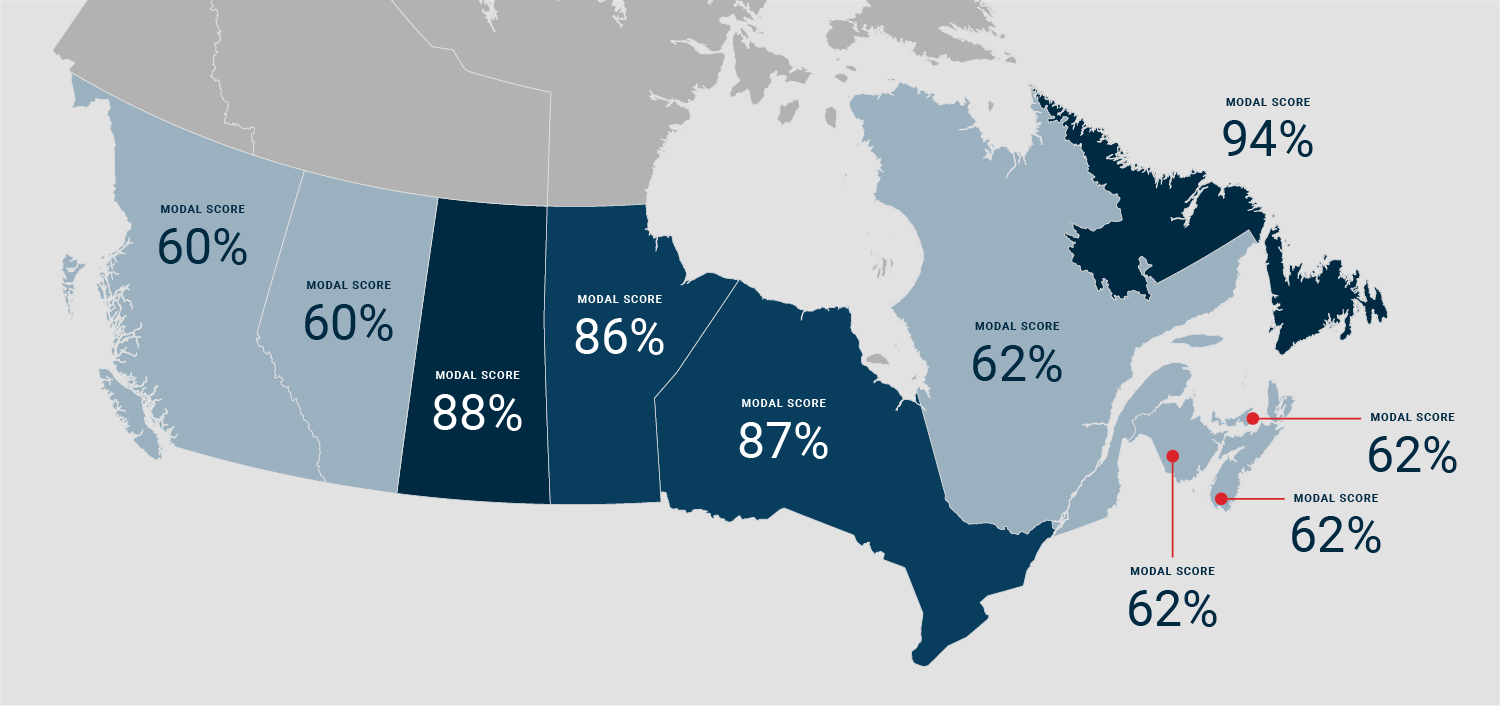
On three of these indicators, institutions across the country essentially have full freedom; they can all decide on student numbers, they can all design their own programs and they can all decide on language of instruction (there are, shall we say, some taboos about this in Québec, but they aren’t legal restrictions, so all good on that score). Universities across the country pretty much have the ability to select students freely, the exceptions being a restriction on non-Newfoundland students in medical school in Newfoundland and, of course, in Ontario, where the government recently reserved for itself the right to override program admission criteria wherever its tiny mind sees fit.
With respect to autonomy of programming, in eight provinces institutions are free to propose new programs, but have no autonomy because the provincial government can simply say no. The exceptions are Newfoundland and Ontario where, with the exception of Université de Hearst, universities basically have full ability to start programs on their own (Ontario still only gets part marks because government approval is still required if an institution wants public funding for the program).
Last, I’ll deal with the issue of quality assurance (QA), where, in general, provinces score badly. This is a topic I have blogged about a couple of times (for instance here and here) and suggested Canada looks pretty weak in international comparison, but part of the reason for the poor score here is that the EUA methodology has fairly tight definitions which may not make total sense in Canada. One indicator is freedom to choose QA mechanisms, by which EUA specifically means whether QA can be done on either an institutional or a program-level basis or not, and by QA providers, meaning whether or not the institution can choose the agency to carry out the work. Now, in Canada, in six provinces, there is a single body in charge of monitoring program quality: in those provinces, institutions have no choice about either mechanism or agency and so get zero on these two indicators. In the other four provinces, institutions do – at least in theory – have choice over both mechanism or agency, even if that choice amounts to “avoiding external quality assurance altogether” (Manitoba, Saskatchewan and Newfoundland) or “universities collectively choosing to submit to a very milquetoast sort of program-level quality assurance that they themselves control” (Ontario).
Anyways, that’s enough for today. We’ll finish up tomorrow with some cross-Canada and trans-Atlantic comparisons.