





Malaysia is one of those countries where higher education is almost always in the news. Partly it’s because Malaysia has for many years sought to use higher education to speed up economic development, but it also has to do with the government’s decision 55 years ago to use a complicated matriculation system to reserve a large number of places in public universities for what are known as Bumiputeras — that is, ethnic Malays and other indigenous peoples.
On the one hand, that’s been the spur of the creation of a dynamic private higher education sector geared towards serving the non-Bumi population (mainly, but not exclusively, Malaysian Chinese). But given how prestige in higher education works, this alternative has never quite been seen as equal, And almost every year there are stories of anger as Chinese students are denied entry into top public university programs.
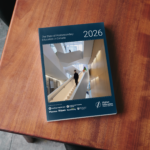
A few weeks ago, the Malaysian government issued a new blueprint for higher education for the next decade. It’s an ambitious document containing 10 “pillars”, or themes, that should guide the system through to 2035. And given the complexity of the country’s higher education policy environment, it should be a pretty consequential piece of policy making.
With me today to discuss this is Chang Da Wan, a professor of education at Taylor’s University in Selangor, Malaysia. We covered a lot of ground in this interview from the Malaysian approach to strategic planning (seemingly quite top down in this case), to the choice of the 10 pillars as this plan’s priority areas, to the government’s decision to pass responsibility for matriculation from the Ministry of Education to the Ministry of Higher Education, and what that might mean for the country’s two track admission system.
It’s a lot to get through in half an hour, but somehow we managed. So without further ado, let’s hear from Chang Da.
The World of Higher Education Podcast
Episode 4.27 | Strategic Planning and System Design in Malaysian Higher Education
Transcript
Alex Usher (AU): Chang Da, welcome to the show. I want to start today’s episode by talking about the culture of strategic planning in Malaysia. I worked there maybe 15 years ago, and it always struck me how, in every office in government. every unit, every subunit, had its own strategic plan prominently displayed. When you went into bookstores, there were huge sections of the business aisle devoted to strategic planning. So this new blueprint doesn’t come out of thin air—it comes out of a very long tradition of planning, which I guess is somewhat unique, even in Asia, where planning is more in vogue. How did Malaysia get that way, and does it actually make the country better at achieving its goals?
Chang Da Wan (CDW): Thank you, Alex, for having me on the show. The whole culture of planning, we probably need to go back into history to look at the last 60-plus years of Malaysia as a nation. That culture of planning has been very much in place even before Malaysia gained its independence from the British.
The first official document—the first Malayan five-year plan—was actually launched in 1956. That was the year before Malaya got its independence from the British in 1957. And subsequently, Malaysia has never failed to have its five-year development plans, one after another. The most recent, Malaysia Plan 13, was just launched at the end of last year.
So that is a long history of economic planning. Subsequently, that has also been seen in many other areas of development in Malaysia, particularly in education and higher education.
In the context of education, that planning seems to be slightly different from overall economic planning. In education, typically in the Malaysian situation, it always begins with a report—a cabinet report—and from those reports, it usually leads into an action plan.
When the Ministry of Higher Education was first established in 2004, what happened almost immediately after the establishment of the new ministry was that a commission was put together and a committee was formed to review the state of higher education and make recommendations to the government.
What is interesting is that that report was subsequently turned into the National Higher Education Strategic Plan, which was launched in 2007. It was supposed to guide Malaysia’s higher education development all the way to 2020.
What is interesting about that plan is that, myself and some of my colleagues have argued, it was actually the most instrumental in shaping what we see in higher education today. That plan had a lot of influence from new public management perspectives and concepts being introduced into higher education.
That was also the time when we first saw the explicit influence of neoliberal policies being put in place in higher education.
As that document was undergoing a midterm review in 2013, that was also the time when the Ministry of Higher Education was merged with the Ministry of Education, after a cabinet reshuffle by the then–Prime Minister Najib.
What happened then was that, as the team was reviewing the strategic plan for higher education, the Ministry of Education—which took care of schools—had just launched the Malaysian Education Blueprint 2013 to 2025.
Hence, I would always say that the higher education blueprint to 2025 was an accidental document. It was essentially repackaged, with a lot of extensions and continuations from the earlier strategic plan, but structured differently to coincide with the school blueprint.
The follow-up to that is what we have just seen: the launch of the Malaysian Higher Education Blueprint 2026 to 2035.
AU: That first blueprint, the 2015 to 2025 blueprint, that’s partially a continuation of the national strategy from 2007, but it’s also a bit of a shift too, right? What, if any, were the shifts that happened between the 2007 document and the 2015 document?
CDW: I would say the biggest shift is in the structure of the document. Whereas the 2007 strategic plan looks at higher education in a narrower scope, without really thinking about how it connects to, for example, the school sector, the strategic plan is much more numbers-driven. So it has very clear indicators like how many Malaysian universities should be in the top 50 of particular rankings, how many in the top 100, and so on and so forth.
One of the key features that continues between the 2007 strategic plan and the 2015 higher education blueprint is the continuation of a neoliberal approach to higher education, as well as an intensification of new public management concepts being brought into the system.
AU: It’s interesting you talk about neoliberalism, because usually when you talk about neoliberalism in higher education, you’re talking about government steers and universities manage. But of course, there’s still a fair bit of micromanagement.I’ve always found in the Malaysian system that the budgetary system isn’t really based on block grants to institutions. The government still has a big say in how institutions spend their money. So let me ask a question about how this blueprint was created. Was there a lot of public consultation, or is this really a top-down exercise?
CDW: I would say it is still very much a top-down exercise.
It begins with the need to have a new blueprint. And if you look carefully at the kind of questions that were being asked, there was a public survey that took place, I think, in the middle of 2024. They basically asked the public: what’s your opinion, and how successful has the blueprint been?
In terms of approach, the public consultation seems very similar to what was done in 2015. The consultation for 2015 was not done by the blueprint team itself—it was done by the team reviewing the earlier strategic plan at that point.
One can argue that if it’s a public survey of 1,800 respondents, how representative is that?
I’m also actually disappointed by the lack of clarity around what exactly took place in the last blueprint—what were the achievements, and what were the areas that fell short of achieving the targets.
If you look at the current blueprint, you only see one page addressing this—really just one question from the public survey: how satisfied are you with the overall performance of the last blueprint?
The largest category is “satisfactory,” which accounts for about 44%. So to me, that’s an area where things are not very clear, aside from the number of people who were, in some way, consulted.
I mean, it’s quite an impressive number—over 6,000 people were engaged through different town halls or public consultations. But again, to what extent were those inputs actually translated into the development of the blueprint?
AU: The strategic plan has 10 pillars, which, you know, is a lot. I do strategic plans, and I gotta say, I don’t think I’d ever put one out that has 10 pillars, because if you’ve got 10 priorities, you probably have no priorities. But from your perspective, which are the three or four that you see as being particularly important? And are there maybe one or two that you think are missing?
CDW: I wouldn’t say it’s about which one is more important or which one is missing. I would just point to two things about the pillars. The first is what has been taken away from the previous set of 10 shifts and what has been brought into the new set. There’s really only one change: the pillar related to globalized online learning was taken away, and what has been introduced instead is planetary health and sustainability.
I can understand why planetary health and sustainability has been included, but it does puzzle me. As we move into an environment with so much disruption coming from technology, that whole pillar—which was supposed to focus on technology—has been removed and instead embedded across other pillars. So that, to me, is a big surprise.
The second point I would make is that you still have 10 different pillars, each representing different areas of higher education. But having this structure in such an important document creates a problem, which is a lack of connectivity across the pillars.
One of the big challenges is that when you want to change something—for example, if you want to amend the law to restore institutional autonomy—that change is not just a legal change. It has implications for university finances, for staffing, and for salary structures.
So I wonder how, in a strategic plan with 10 separate pillars, each with its own indicators, that kind of cross-cutting structural change is actually going to play out, especially for the kinds of major reforms that the higher education system requires.
AU: Chang Da, I want to ask you about one thing that wasn’t really in the document, but was certainly present at the time. It’s not considered one of the pillars, but it was a big deal when the document was launched. This has to do with the higher education ministry now being given responsibility for the year prior to higher education—the matriculation year.
This has been a big deal in Malaysia for a long time because there are two matriculation systems, right? One that explicitly favors Bumiputera—which is Malay and other Indigenous ethnic groups—and another which tends to cater to the Chinese and Indian population. What’s going on here? Does this signal that maybe we’re going to have only one matriculation system soon?
CDW: You’ve definitely pointed out an area that is very much controversial in the Malaysian context, due to the whole issue of ethnicity that has long been at play.
But there are a few things we need to unpack to understand this in a more coherent way.
First of all, the move of that pre-university year from the purview of the Ministry of Education to the Ministry of Higher Education was actually first mentioned in the 13th Malaysia Plan last year. It was just a mention, with no elaboration in that economic plan.
That elaboration was followed by an announcement by the Prime Minister at the launch of the blueprints. The two blueprints were launched together, and there was a mention of moving that one year of pre-university education from the Ministry of Education to higher education.
But if you read carefully, both blueprints are completely silent on this. So at this moment, it’s not clear what is going to happen.
And it’s not as simple as just moving the matriculation examination. We are actually talking about three different pre-university systems that enable Malaysian students to enter public universities.
Of the three, two of these pathways have ethnic quotas.
One is the Malaysian matriculation system. This used to be run by the Ministry of Education. It involves boarding school facilities and leads students to sit for the matriculation exam, which then qualifies them to enter public universities.
The second pathway with an ethnic quota is the foundation programs in public universities. I think 18 of the 20 public universities offer these foundation programs for specific undergraduate programs. Some are open in the sense that students can enroll in a foundation in science, for example, which then enables them to continue into science-related undergraduate programs across public universities.
The third pathway is a public examination—equivalent to A-levels in the British system—which involves about one and a half years of preparation and leads to an exam called STPM.
Traditionally, this pathway does not have an ethnic quota. As a result, it has often been taken mostly by Chinese, Indian, and non-Bumiputera students—but that is not necessarily true anymore.
This whole issue has increasingly evolved into more of a class issue rather than purely an ethnic one, because about 70% of students who sit for STPM come from the bottom 40% of the country’s income distribution.
AU: The fact that the government is trying to bring this whole area of policy under the higher education wing—does that signify that they want to change this, or that they don’t want to change it? I’m sort of curious, because it is such a sore point and has been for decades. The question of who gets to go into public universities in Malaysia goes back to the riots in the late sixties and early seventies, and the whole notion of reservations for Bumiputera. Are we likely to see change, or is the point of these measures to try and freeze the system?
CDW: It’s a good question. I think there are two levels to this where it has now become quite complicated. Ideally, it is the Ministry of Higher Education that should be in charge of policies on how to synchronize and manage a system that has multiple pathways. That part of policy should rest fully in the hands of the Ministry of Higher Education.
The problem now is that, when these pre-university programs are also moved under the Ministry of Higher Education, another question arises: who is going to run the matriculation colleges?
These used to be part of the Ministry of Education. Teachers were hired through the public system by the Ministry of Education to teach in these institutions. Now, if you move them into a different ministry, that creates a big question mark.
Then there’s the issue of the public examination, STPM. The examination itself is run by an independent body, but the teaching for those programs is done in public schools—what we call Sixth Form colleges—which are also under the Ministry of Education.
So it becomes quite a challenge in terms of implementation. When the government announced that this would move under the Ministry of Higher Education, does that mean the running of those programs will also shift?
At this point, nobody is really able to give a clear answer on how that is going to happen.
AU: Got it. One other thing that I thought was really interesting in the document is that it talks about measuring success by measuring student wellbeing. I got the impression, from a quick search, that there are other areas of public policy in Malaysia where wellbeing is something that is measured. I’m not sure exactly how, but as a way of assessing policy success.
Is that new in higher education—that student wellbeing is, in effect, a policy indicator? And how do you think they’ll be measuring it from here on? Or how have they been measuring it? If they don’t do it yet, how do you think they’ll do it in the future?
CDW: One shift that can be seen in this particular blueprint is an increased emphasis on the notion of wellbeing. I think that’s a good thing.
But I’m also glad that the indicator was not spelled out, because the problem with many of these blueprints is that when there is a specific indicator, you can lose the meaning behind it. It becomes a very narrow kind of measurement that defeats the broader idea of what wellbeing is all about.
What is interesting, in relation to that, is the reintroduction of this concept called I-C-G-P-A.
AU: CGPA is cumulative grade point average—what does the “I” stand for?
CDW: The “I” stands for integrated.
Typically, in universities, CGPA reflects academic performance. The introduction of I-C-G-P-A was meant to go beyond the academic domain to include areas like patriotism, spirituality, social development, and soft skills.
But one of the big conceptual challenges is: how do you measure patriotism? How do you measure values like honesty?
So it becomes a real measurement challenge. And eventually, it was scrapped in 2018, when the new government came in and said, essentially, “this is rubbish—we don’t want this anymore,” and it was thrown out.
But what is interesting is that it has now made a return in this particular document, and it still remains unclear how it is going to be measured.
AU: And it’s interesting—just given how many Asian countries are focusing so heavily on artificial intelligence and change in education right now—it is a bit of a surprising omission. What do you think the next blueprint will have to deal with? What are the challenges up to 2046? Are there things that were left out this time that will have to be addressed?
CDW: I would say that, if the university is still there in 2036, the next blueprint will have to ask a fundamental question—this is my second point—which is: what is the role and purpose of the university?
We need to critically ask that question. In a changing world, if we assume that the university remains relevant as an institution in society, then we need to ask what that role is, and how it will change.
That leads me to my third point. I also hope to see more room for institutions.
You’ve got to understand that this is a national document. We’re talking about a sector with three to four hundred institutions—20 public universities, about 60 private universities, and many other institutions in between.
To what extent are we providing room for these institutions to diversify, and to tailor and adapt their roles in providing higher education to students, serving different communities, and fulfilling their purpose as higher education institutions?
I think that room for institutions to navigate within this very utopian-like national policy is going to be crucial. Because if there isn’t room for that, then we are going to see a convergence—institutions becoming the same kind of university, following a single model.
And that is going to be even more consequential for the future development of higher education.
AU: Thanks so much for joining us today.
CDW: Thank you.
AU: And it just remains for me to thank our excellent producers, Sam Pufek and Tiffany MacLennan, and you, our readers and listeners, for joining us. If you have any comments or questions about today’s episode, or suggestions for future episodes, please don’t hesitate to get in touch at podcast@higheredstrategy.com. Join us next week, when we have a rare double act joining us: Dan Collier and Michael Kofoed of the University of Memphis and the University of Tennessee, Knoxville, respectively. They’ll be joining us to talk about the record so far of the Trump administration. Bye for now.
*This podcast transcript was generated using an AI transcription service with limited editing. Please forgive any errors made through this service. Please note, the views and opinions expressed in each episode are those of the individual contributors, and do not necessarily reflect those of the podcast host and team, or our sponsors.