


Hi all. Welcome back to the Fifteen, your bi-weekly dose of higher education stories from around the world. This week: students winning elections, Pope Leo weighing in on AI in higher education, a Prime Minister getting caught plagiarizing his PhD thesis, and much more. Let’s get started!
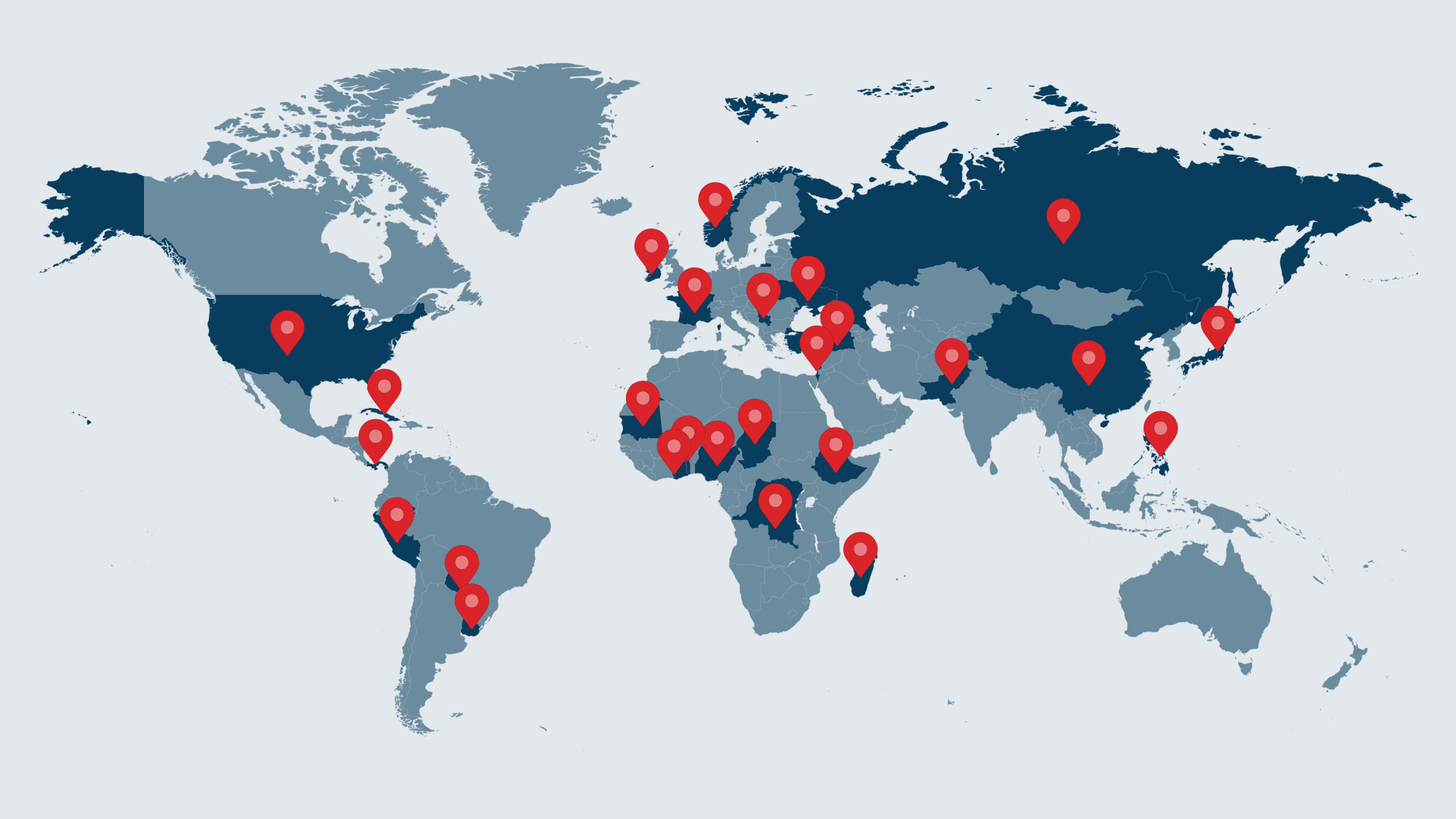
- Intriguing news on Artificial Intelligence from all over the planet. Pope Francis gave a speech last Saturday at the Catholic University of Uruguay arguing the pressing need that education in our schools and universities contribute to the judicious use of technologies and AI, placing the person before the algorithm and harmonizing technical, emotional, social, spiritual, and ecological intelligence. Over in Norway, a Parliamentary Committee on the use of Artificial Intelligence in Higher Education (can you imagine living somewhere that serious? Amazing) submitted its final report and its recommendations were stark: assessments need to be entirely rethought in order for institutions to retain public trust. And yes, they know this will be expensive. This comes at the same time as a report appeared indicating that half of Norwegians feel AI will negatively impact education in the country. This sentiment was echoed by a study in Ireland which showed that 83% of Irish academics felt similarly. On a lighter note: an employee at the University of Kentucky received a religious exemption from using artificial intelligence at work on grounds that he was a humanist.
- Russia has been very active recently weeks in using educational diplomacy to maintain support among African countries. At the third Russia-Africa Summit, Russia signed co-operation deals with Togo and Congo involving both higher education co-operation and a new round of Russian university scholarships. The president of Ghana, John Mahama, accepted two honorary degrees while in Moscow. The Government of Ethiopia invited Russian universities to partner with its new, yet-to-be opened Artificial Intelligence University. In partial reciprocation of all this, the African Association of Universities opened its first offices outside the continent in Saint Petersburg.
- In Japan, the selection of Yuko Fujigaki as President of the University of Tokyo (Todai) continues to generate controversy. Beaten by a male colleague in the indicative poll of Todai faculty members, the Board’s decision to nonetheless select the female candidate has rankled many, who call it an “EDI hire”. Now, the Ministry of Education has stepped in, asking the university to review its procedures. This is not the first time a Japanese university board has overridden the results indicative poll; the universities of Chiba, Niigata and Kyoto have all done the same in the past three years. It is, however, the first time the Ministry has asked a university to review its procedures. What could the difference be this time?
- The US mid-terms happened ten days ago, and yeah, everyone’s still coming down from the sugar-high of a Black Democrat taking Mississippi (among other things), but for higher education, the main changes are going to happen at the state level. The University of Tennessee’s Robert Kelchen has the best round-up of things to watch in the coming months.
- СТУДЕНТИ ПОБЕЂУЈУ! The Student List in Serbia, a political movement which essentially displaced a set of discredited opposition and then took on an entrenched, corrupt, populist government by endorsing a set of non-party experts for Parliamentary election, won power on the 25th of October, after a nearly two-year campaign that began with a protest against corruption in Novi sad two years ago. Political scientists are going to be studying this example of decentralized, distributed leadership for decades.
- The cost and difficulty of transportation to and from university as a barrier to access has cropped up repeatedly in the last couple of weeks – mostly in Mauritania – where it was the central issue in a student strike, which was ended when students got concessions on the file. But it is also an issue in Cuba, where fuel shortages have made transportation difficult, as well as in Chad.
- The Philippines has a new international education strategy, somewhat modelled on Malaysia’s. It has two big prongs: first, making it easier for foreign institutions to set up in the Philippines, and second, to slash bureaucracy around student mobility.
- China has a “dual head” system of university management where the president of the university is the head of academic affairs and the party chief is in charge of “political” affairs, an academic/non-academic split that somewhat resembles that between registrars/heads of administration and pro-rectors/vice-rectors academic in Europe. Futao Huang, of Hiroshima University, has published one of the most detailed studies of the educational and work backgrounds of university presidents and party chiefs, and finds among other things that the positions are only rarely aligned in terms of professional alignment, international orientation and institutional mobility.
- In response to concerns about the balance of quantity and quality of higher education institutions moving too far in the direction of the former, proposals to put a moratorium on new universities in Peru and Nigeria for five and seven years, respectively, are both close to passing their legislatures. This would be a lot more convincing if this were not the second year in a row that each country has instituted such a moratorium (see you next year?)
- In the never-ending series of European political scandals involving politicians found to have plagiarized part of their doctoral theses, the Prime Minister of Lithuania has been told he has six months to revise and resubmit his 2015 thesis on factors affecting alcohol consumption, due to evidence of breaches of academic integrity.
- Two editions of the Fifteen ago, we dropped in on fake degree scandals in Panama and Paraguay. The Paraguay scandal is continuing to get worse: the government now thinks as many as 100,000 degrees were issued without proper authorization in the past few years. At Dow University of Health Sciences in Pakistan, 27 employees were sacked last month for having falsified degrees. And in Madagascar, three senior university employees including a former President of l’université d’Itasy, were jailed for trafficking in fake diplomas.
- Good financial news for higher education in the Eastern Mediterranean: Israeli universities have been doing very well by American philanthropists lately. Hebrew University took in $250 million from American hedge fund manager John Paulson (wo will get the main campus on Mount Scopus named after him), as well as a $30 million gift dedicated specifically to its medical faculty. Meanwhile, the Turkish government allocated a record 871 billion lira for universities next year – a 33% increase over last year (not as bananas as it sounds given that inflation is currently running at 29%).
- Brazil has announced it is extending a quite fascinating student aid program. For years now, the government has paid a monthly stipend to poorer secondary students and provided a “locked savings” account worth a cumulative R$9,200 (about US$1700), which the student gets access to once they graduate high school. Now the government is preparing to 1) make the policy universal at the secondary level and 2) introduce a slightly more generous program on a needs-tested basis for students at public universities, giving new graduates a bit of a nest egg with which to start their careers.
- In Ukraine, where students are exempt from the draft, student status is worth money. Two weeks ago, police discovered a scheme to admit students subject to military service to a university in exchange for cash. The state is also tightening up inspections of universities, particularly with an eye to reducing enrolments of males over the age of 25.
- Weeks of protests in France have finally persuaded the government to concede that it will revamp the online admissions portal known as Parcoursup. Probably not for this year (there are only a few weeks until applications open), but deffo for 2028. France Universités is trying to restrain expectations, however. The lobby group (quite sensibly) points out that a) the root cause of dissatisfaction is that there is massive excess demand for certain programs at certain institutions and b) that you can’t actually solve a capacity problem by fooling around with an application process.
And that’s it for this edition of the Fifteen. See you back here in two weeks.