





Hi all. Today I am doing something a bit different: I’m releasing some data, which is part of our upcoming World of Higher Education – Year in Review (YIR) as a separate report, two weeks in advance of the YIR release date. Why? Because I think that the data in here is interesting and important enough to warrant some extra attention.
The headline is this: global peak higher education is coming faster than anyone thinks. My estimates here suggest that global enrolment will peak in 2035, and then begin falling thereafter, mainly because of a quite amazing demographic collapse in China.
If you want to read the whole report, with all the methodological doo-dads and things, please take a look at the report here. But I will take you through the short version here.
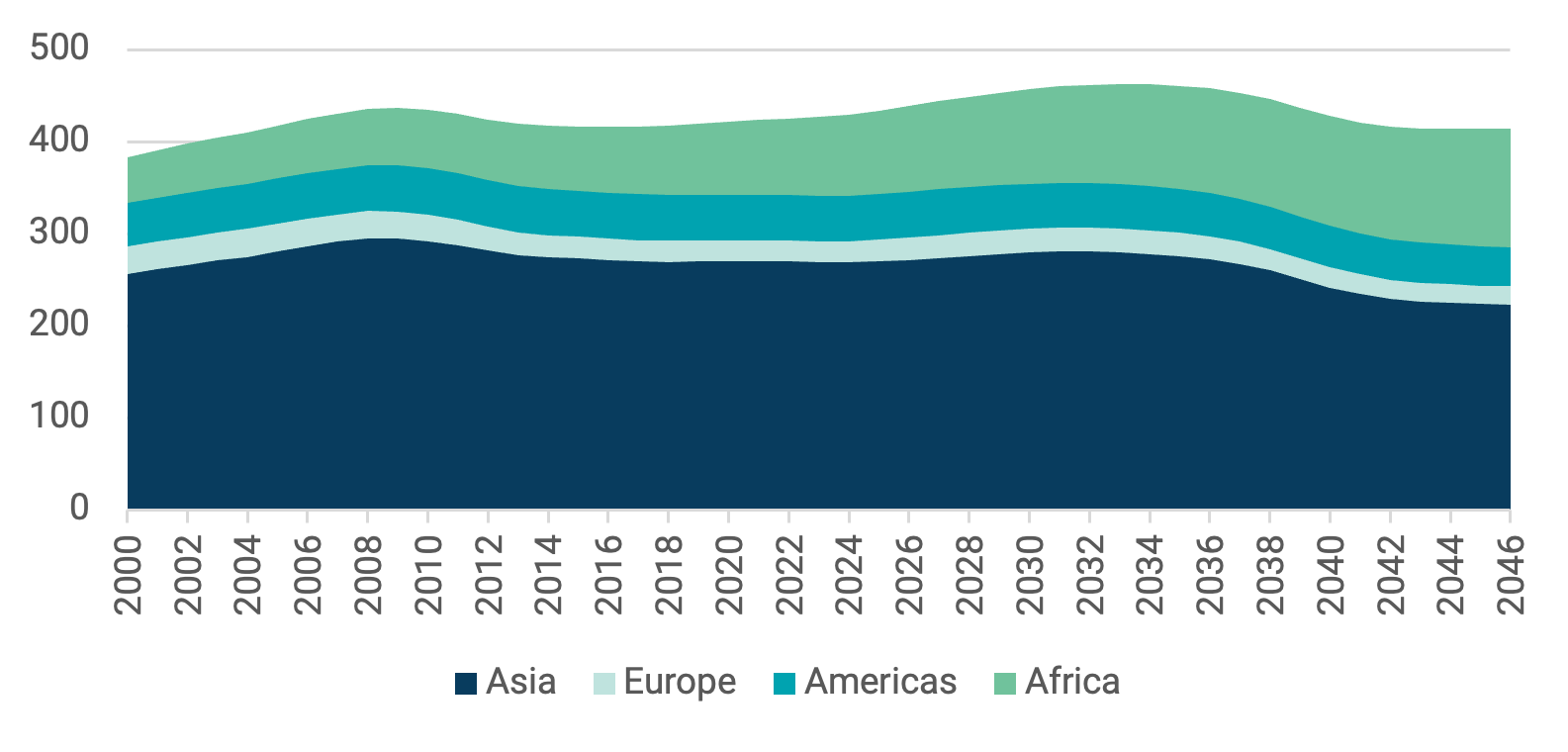
Figure 1 shows the evolution of the world youth population (18-21) from 2000 to 2046, based on estimates from the United Nations Development Program (UNDP).
Figure 1: World Youth (18-21) Population, by Continent, in Millions, 2025-2046 (projected), Based on 50 Most Populous Countries
(Small note here: For a couple of reasons – partly time, partly data availability with respect to enrolments – I limit this study to 50 of the 52 largest countries in the world. Basically, that includes every country with more than about 28 million in population, minus Afghanistan and Yemen, for whom current enrolment estimates are, let’s say, deeply unreliable for forecasting purposes. This study therefore covers about 85% of the planet, so if you want genuinely global numbers, add another add about 15% or so).
Youth numbers in Europe and North America have been fairly constant over the past two decades. Meanwhile, numbers have grown substantially in Africa and declined in Asia, particularly in the period 2010-2020. Global youth populations shrunk somewhat in the early 2010s after the Asian youth population peaked around 2008. Since about 2016, however, growth has been nil or negative in all continents other than Africa. This situation, which is projected to last until about 2033, is leading to a gentle increase (11%) in the number of young people globally. Although the global population will keep growing until late this century, the 18-21 population will peak in 2033 and begin declining sharply after 2036.
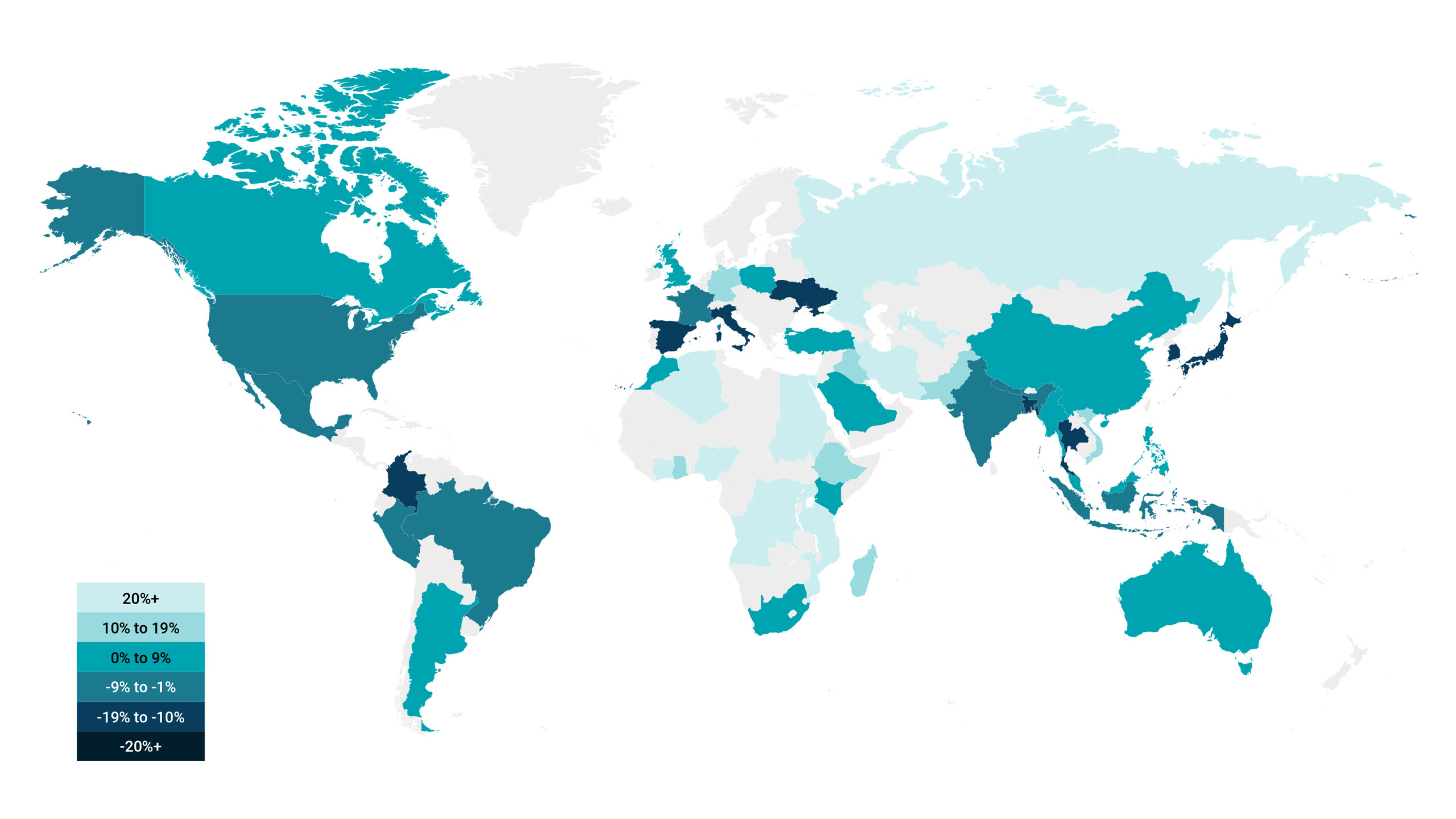
Figures 2 and 3 show the expected change in youth population at a national level over the periods 2026-2036 and 2036-2046, respectively. For the next ten years, the situation looks positive: only seventeen of the world’s most populous countries will see declining youth populations, more than half of them located in Europe or the Americas. Of note, perhaps, is that India’s youth population is one of those seventeen – a portent of things to come across the developing world.
Figure 2: Projected Change in Youth Population, by Country, 2026-2036
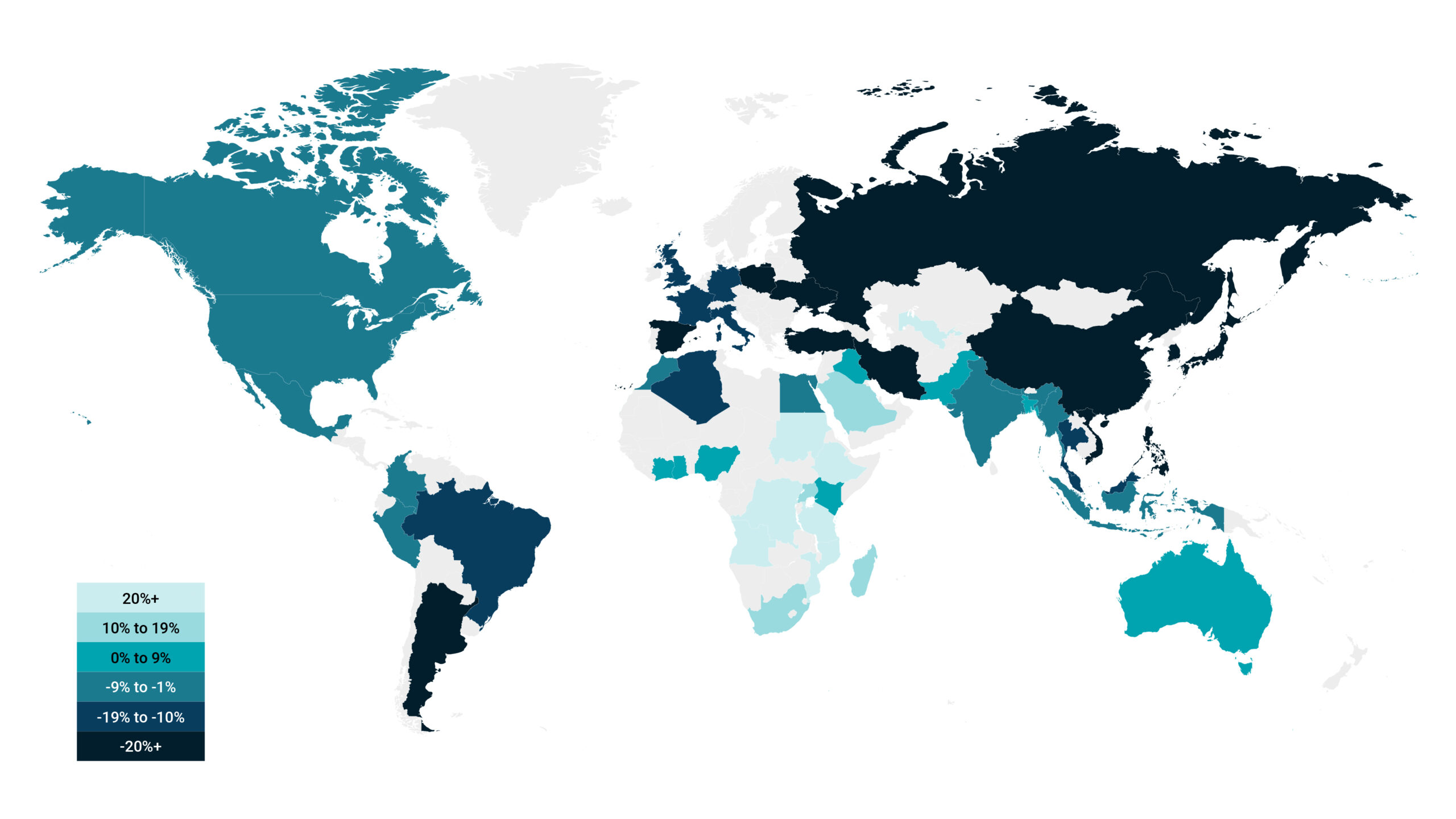
After 2036, however, the situation changes very rapidly. Between 2036 and 2046, thirty-one of the world’s fifty most populous countries – including all of the ones located in Europe and the Americas – will have youth populations in decline. The most precipitous decline will be in China, where the 18-21 population is expected to fall from 69.5 million to just 33.5 million, a decline of 52%.
Significant growth is still on the cards for sub-Saharan Africa, Uzbekistan, Bangladesh, and Pakistan; but apart from those countries, decline will be almost universal. Among richer countries, only Canada and Australia – two countries which historically have relied on immigration for population growth – will see relatively stable youth numbers over the coming decade.
Figure 3: Projected Change in Youth Population, by Country, 2036-2046
Projecting Enrolment to 2046
To get from population projections to enrolment projections, you need three things. First, you need current enrolments, which are available from various national sources or the UNESCO Institute for Statistics. Second, you need to have estimates of future economic growth rates, because economic growth conditions both the demand and the ability to pay for higher education. And third, you need to have a sense of exactly how quickly enrolment tends to grow at different levels of GDP/capita. Again, do check the full document if that’s of interest, but just know that my estimates of these are both based on thousands of observations across 179 countries since 2000 (made with some assistance from Claude).
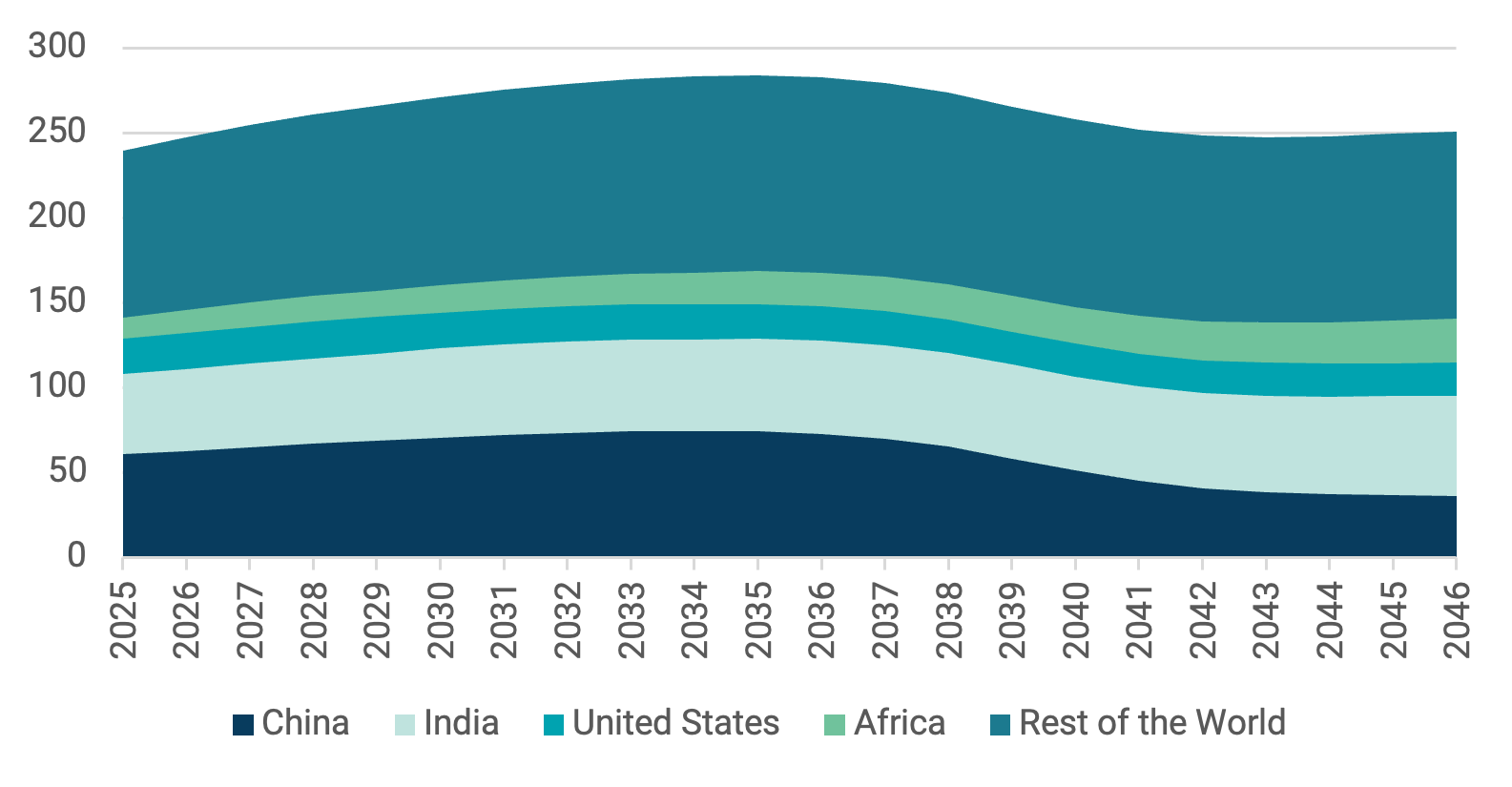
Applying all of that data to existing tertiary education figures makes it possible to project enrolments for all of our 50 countries and thus for the world as a whole for the next 20 years. The result is shown below in figure 4. Effectively, what the projection shows is that rising populations and growing economies in Africa and South and Central Asia will result in increased enrolments, but that this growth will be nowhere near enough to offset the very significant drops in enrolment in richer countries, particularly in China. Global enrolments will continue to rise for another decade until they peak in 2035, and then begin shrinking, above all because of China’s extraordinary baby bust which began just before COVID.
Figure 4: Projected Tertiary Enrolments, in Millions, World’s 50 Largest Countries, 2025-2046
Figures 5 and 6 show expected enrolment changes for each of our 50 countries over the next two decades. It is clear to see how there will be room for complacency in the near future: the combination of growing youth populations and economic growth will ensure rising enrolments in all but seven countries, even in places like India where the youth population is falling (although one of the biggest losers of the next decade will be the United States). And, of course, some African countries are likely to increase substantially. In this projection, Cote d’Ivoire is expected to see enrolment growth of 159%. Seven other sub-Saharan African countries are also projected to see enrolments grow by 50% or more, as are Pakistan and Uzbekistan.
Figure 5: Projected Change in Enrolment, by Country, 2026-2036
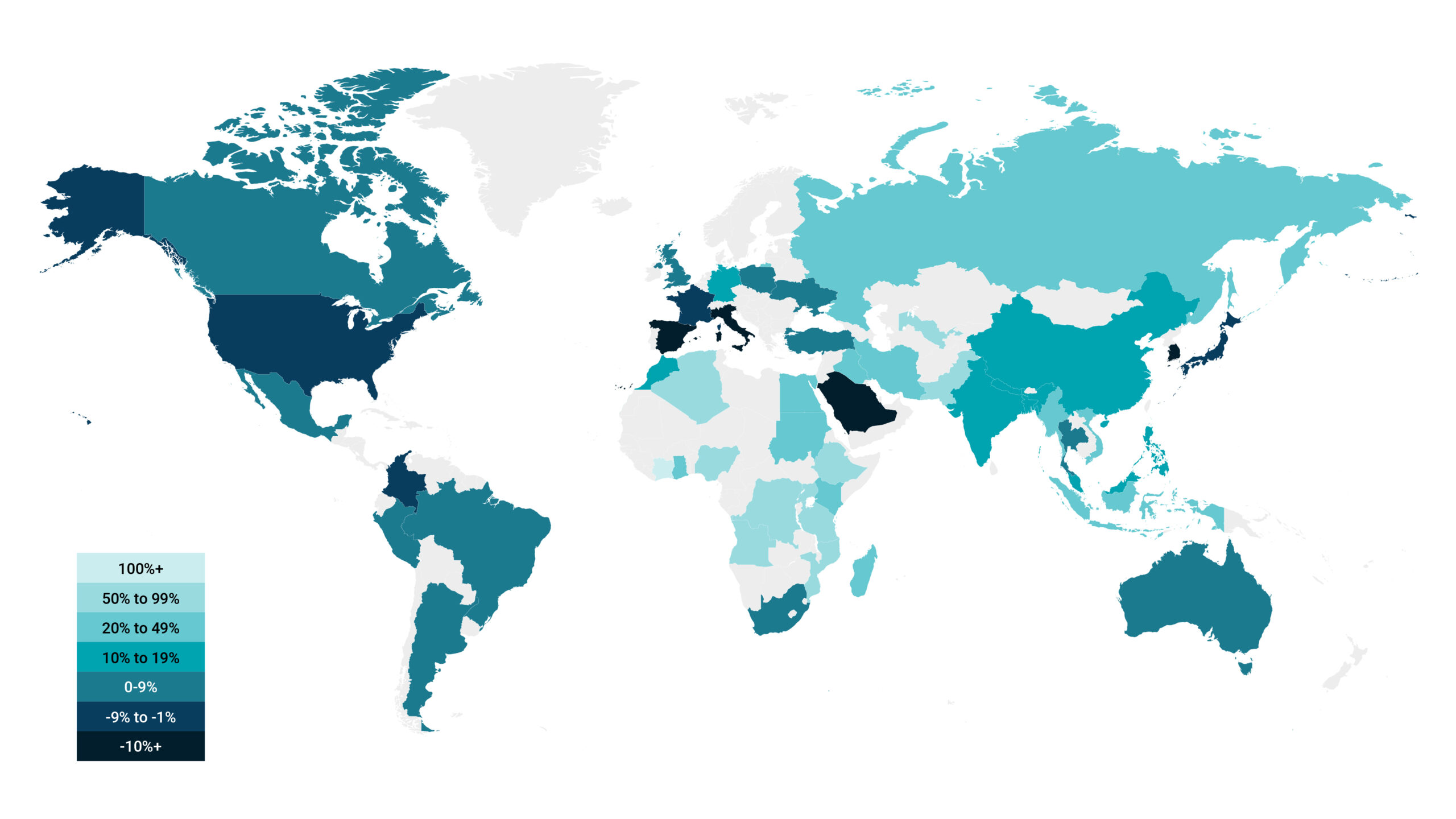
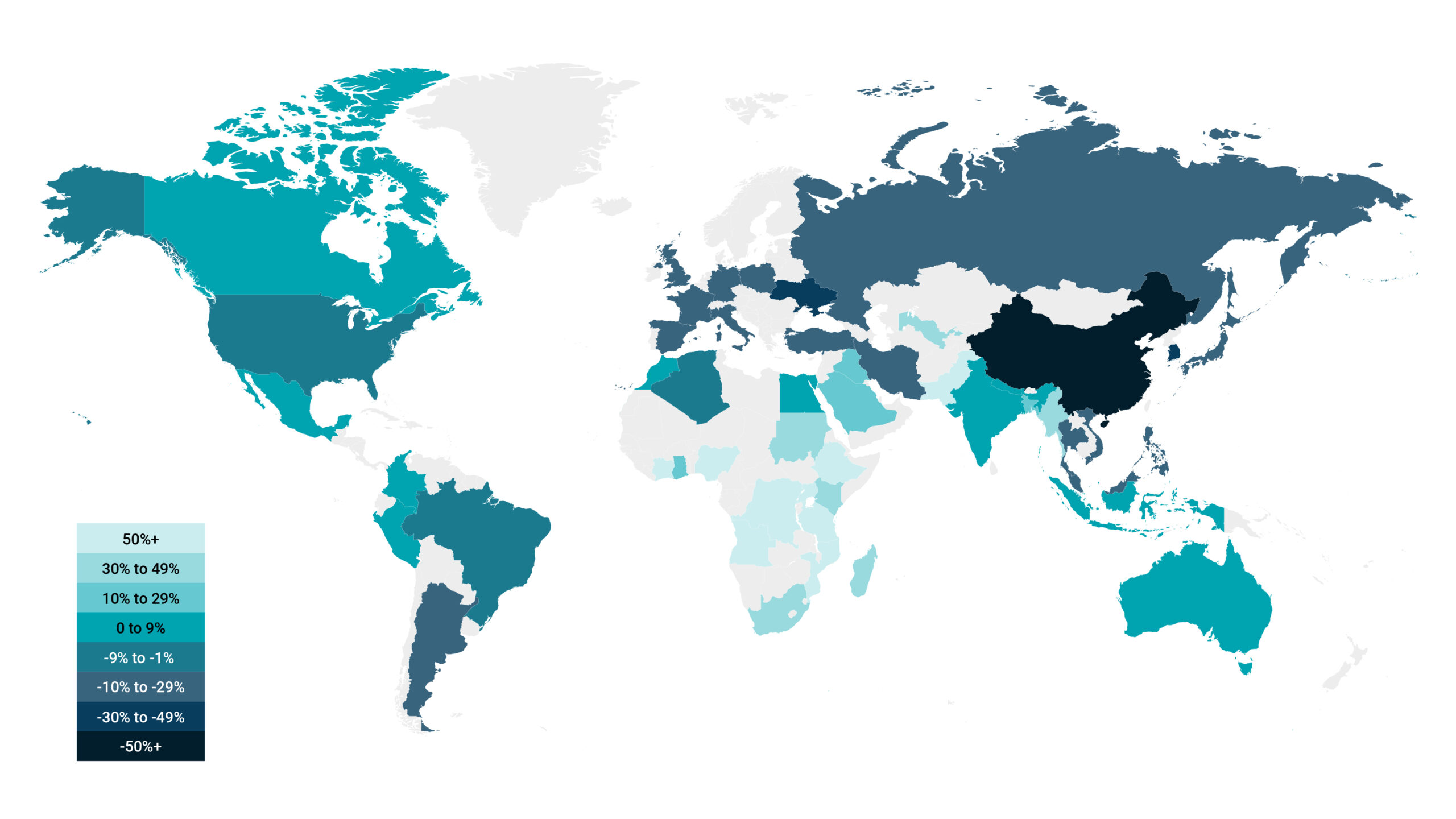
But as we reach the mid-2030s, the picture will alter substantially. Rates of growth in sub-Saharan Africa will subside, though they will do so from much higher baselines, with the result that absolute growth in this region will actually be larger after 2036 than before. Even so, some of these rates will remain impressive, with Angola projected to grow 84% over the course of the decade, and Tanzania is not far behind at 73%. But at the same time, slightly less than half of all countries (22/50) will see falling enrolments, most notably China, though Argentina, South Korea, and Ukraine will also see very significant drops. No country in Europe will be spared a drop; in the Americas, only Colombia, Mexico, and Peru will be spared one. Asia is a more mixed bag, but it seems significant that even though India will almost certainly become the world’s largest higher education system around 2040, its annual growth rate at that point will be less than 1% per year, and its rise to #1 will come about far more because of China’s decline than because of its own advances.
Figure 6: Projected Change in Enrolment, by Country, 2036-2046
Conclusion: It’s Not Destiny
There are lots of ways these projections could be wrong. Countries – particularly in Africa – might find reasons to increase the provision of higher education in unexpected ways. Universities may get better at persuading mid-career professionals to return to school for lifelong learning, as has occurred in Brazil and Italy. And, of course, any number of policy calamities or felicities might occur at the individual national level (Pakistan, for instance, is seeing a reduction in student numbers with no corresponding drop in youth population). Neither demography nor economics are destiny.
That said, the era of global expansion of higher education – which has been a defining feature of the sector since the end of World War II – seems likely to be coming to an end. Peak higher education is in sight. If it does not happen in 2035, it will likely happen not too long thereafter. Patterns of enrolment would need to depart substantially from post-war norms in order for higher education in Europe, the Americas, and parts of Asia – especially China – to avoid the scenarios outlined above. In these parts of the world, the search to find ways to manage decline probably needs to be sped up substantially.