


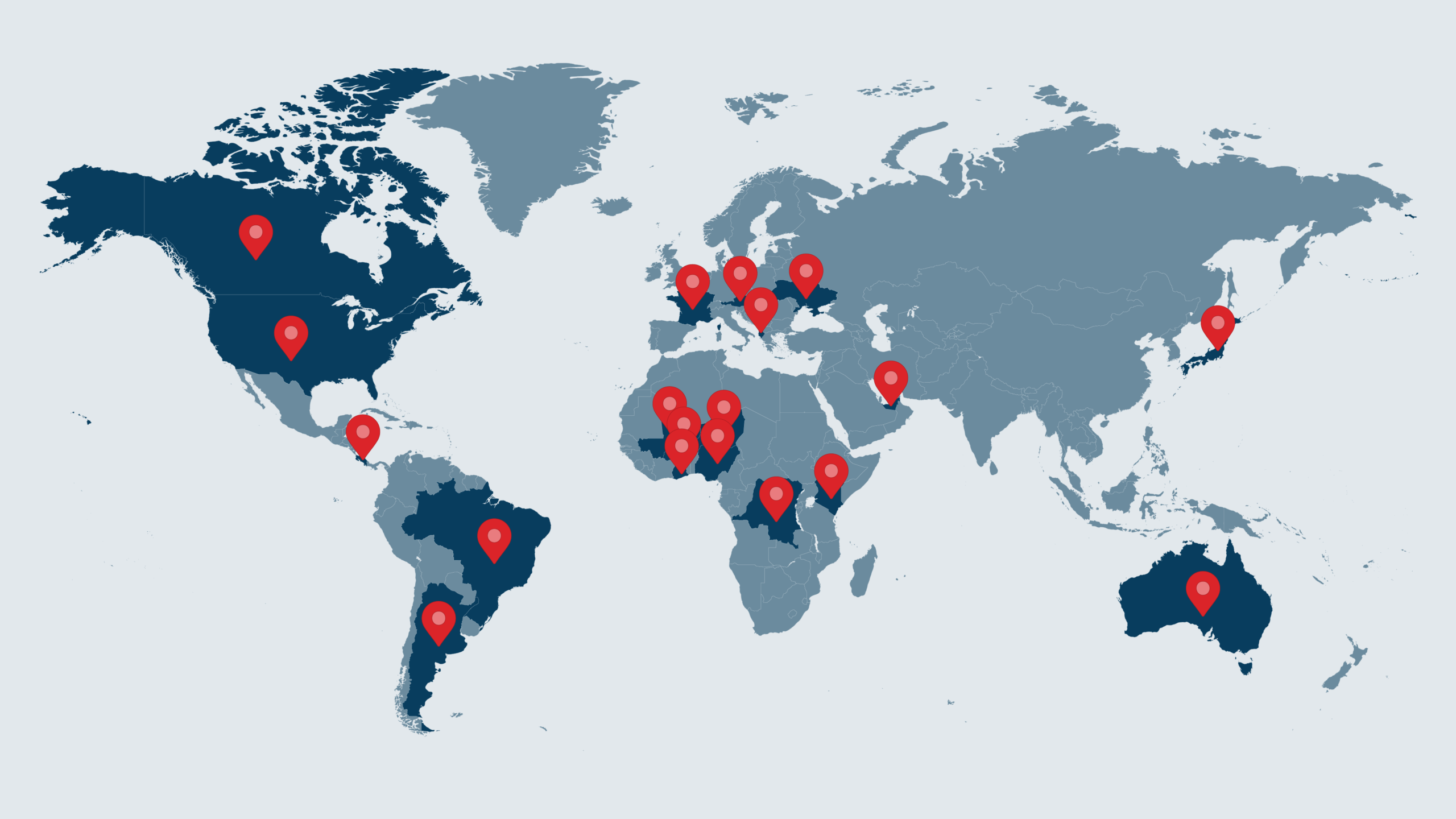
Hi all. A big one this week, with education-related protests in at least half a dozen countries. Let’s get started.
- Let’s begin in Ontario, Canada, where the provincial government announced that it was suspending all student aid to all private colleges. The reason? Unclear. It has already been established that the government winked at massive fraud in a handful of private colleges over a period of several years before yanking their eligibility for student aid back in the spring. No additional evidence was provided as to why this step was being taken. The obvious conclusion is that it was an attempt to distract attention from the government’s previous oversight failures, and its decision to cut hundreds of millions of dollars from public college and university students last February instead of dealing with the real crisis.
- In West Australia, the state government is dead keen on merging its three main universities (Curtin, Murdoch, and West Australia) into one mega-institution, as neighbouring South Australia did last year when it created the University of Adelaide. The University of West Australia really likes this proposal, and Curtin University really doesn’t. The state government commissioned KPMG to write a document outlining the pros and cons; Deloitte came back with the patently ludicrous claim that the merger would “pay for itself 16 times over”. That alone should have rendered the report completely disqualifying but then came news that much of it was filled with AI errors. The government ordered Deloitte to “revise and re-submit”. Regardless, the state government has set up a steering committee to move the agenda forward.
- The University of Tokyo has an odd way of selecting a President. It invites faculty to vote for different candidates, but then an executive Board makes the selection. In early October, Takao Semeya won the vote by 1,107 to 553 for Yuko Fujigaki, but then the executive board chose to opt for Fujigaki, making her the university’s first female President. Cue an outcry from professors asking “why bother voting?”, and insinuations that gender was a determining factor in the hire.
- Protests in France have ceased to be exclusively about education and instead have morphed into increasingly generalized protests, sometimes violent, about the cost of living. The protests were happening biweekly but have slowed this week because of holidays and exams. High schools are increasingly back in session, but there have been some incidents of destruction at universities, notably in Nantes (the site of a significant occupation) and Rouen.
- Over in Albania, it’s the opposite story: there, a broad anti-corruption, anti-government coalition had been protesting fairly peacefully for eight months, in part over a reputedly corrupt deal allowing the Trump-Kushners to build a resort in the middle of a wildlife resort. Then, two weeks ago, students went back to class. Within days they had joined the existing protests and added a few demands of their own about tuition fees, government funding, and poor job prospects. Result: some pretty spectacular riots, which are now into their eleventh day.
- Two other countries saw major peaceful protests over government underfunding of universities. In Costa Rica, thousands of staff and students marched after the national government cut 8 billion colones from the higher education budget; some institutions said they would no longer be able to expand access given the lack of funds. In Austria, the government disappointed the sector by announcing a three-year budget which presented the sector with an allocation more than a billion euros less than desired despite big protests on Vienna’s Ringstrasse.
- The Government of Argentina has lost another appeal to avoid following the plain meaning of the Congressional vote of late 2025, which required it to increase funding to universities by a little over a third. The government, predictably, paid no attention. Oh, and there have been protests.
- In Ukraine, students in the community of Rivne were moved to online classes after Russian missile struck the Rivne State University of Humanities. Twenty people were injured.
- You may or may not have heard of a political grouping called the Alliance of Sahel States. Made up of Mali, Burkina Faso, and Niger – three West African states all under military governments – the Alliance has just announced plans to harmonize their higher education systems, align their curricula, promote student mobility, and even – this sounds more rhetorical than real – share resources.
- In one of the more interesting and potentially consequential moves of the past few years, the Nigerian government has taken university staff off the public payroll system, meaning they are no longer civil servants but employees of each individual university. The main benefit would seem to be that it would give universities more speed and flexibility in hiring; but without a lot more money in the system it seems unlikely to meaningfully improve faculty relations and reduce the number of strikes each year. It’s probably a step in the right direction though.
- Sticking with the theme of African labour relations, strikes have once again been dominating the agenda in both Ghana (where a strike by administrative workers ended last weekend), and Kenya, where lecturers have gone on strike partly over unmet promises from previous rounds of collective bargaining, but more directly because the universities are unable to function properly staggering as they are under hundreds of millions of dollars of debt.
- In the DR Congo, the saga of universities in rebel-held Goma continued. Earlier in the summer, the government ordered the university to cease operations and students to move to other institution on the grounds that the rebels had been interfering in the management of the university. Last week, the universities re-opened for the fall term anyway despite the possibility that any degrees awarded would not receive official sanction. No reaction yet from Kinshasa.
- Things got quite hot in Brazil after the results of the first round of the Presidential election were released, with right-wing Flavio Bolsonaro in the lead. The national students’ union UNE decided to go all out for Lula da Silva; this resulted first in Bolsonaro laughably trying (and failing) to get an injunction to stop the UNE from doing politics on university grounds, and second in student leaders receiving physical threatening messages from right-wing activists. Then came a series of threats against universities and a string of unexplained fires at the Federal University of Pernambuco. The second round of the election is this Sunday.
- Great story from the UAE, where it was claimed that one new university-based AI platform had reduced time required to apply by 70% and also – get this – another one at Khalifa University reduced faculty administrative burden by 60%. Great use case, right? My read of the announcements is that process re-design rather than the addition of AI is responsible for a big chunk of savings, but still….
- In the United States, as a crushing midterm defeat looms for Donald Trump, some folks are coming up with ideas for what American higher education might look like after his regime is over and publishing them as “the Reconstruction Papers”. Michigan State University’s Brendan Cantwell contributed to the section on Higher Education, and it’s worth a read.
That’s all for now. The blog is off next week – we’ll see you back here on November 13 for the next edition of the Fifteen.