



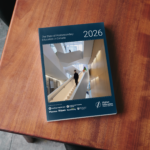



Last week, The Royal Bank of Canada (RBC) put out a discussion paper called Testing Times: Fending Off A Crisis in Post-Secondary Education, which in part is the outcome of a set of cross-country discussions held this summer by RBC, HESA, and the Business Higher Education Roundtable. (BHER). The paper, I think, sums up the current situation pretty well: the system is not at a starvation point but is heading in that direction pretty quickly and that needs to be rectified. On the other hand, there are some ways that institutions could be moving more quickly to respond to changing social and economic circumstances. What’s great about this paper is that it balances those two ideas pretty effectively.
I urge everyone to read it themselves because I think it sums up a lot of issues nicely – many of which we at HESA will be taking up at our Re: University conference in January (stay tuned! the nearly full conference line-up will be out in a couple of weeks, and it’s pretty exciting). But I want to draw everyone’s attention to section 4 of the report, in particular which I think is the sleeper issue of the year, and that is the regulation of post-secondary institutions. One of the things we heard a lot on the road was how universities were being hamstrung – not just by governments but by professional regulatory bodies – in terms of developing innovative programming. This is a subject I’ll return to in the next week or two, but I am really glad that this issue might be starting to get some real traction.
The timing of this release wasn’t accidental: it came just a few days before BHER had one of its annual high-level shindigs, and RBC’s CEO Dave MacKay is also BHER’s Board Chair, so the two go hand-in-hand to some extent. I was at the summit on Monday – a Chatham House rules session at RBC headquarters – which attracted a good number of university and college presidents, as well as CEOs – entitled Strategic Summit on Talent, Technology and a New Economic Order. The discussions took up the challenge in the RBC paper to look at where the country is going and where the post-secondary education sector can contribute to making a new and stronger Canada.
And boy, was it interesting.
I mean, partly it was some of the outright protectionist stuff being advocated by the corporate sector in the room. I haven’t heard stuff like that since I was a child. Basically, the sentiment in the room is that the World Trade Organization (WTO) is dead, the Americans aren’t playing by those rules anymore, so why should we? Security of supply > low-cost supply. Personally, I think that likely means that this “new economic order” is going to mean much more expensive wholesale prices, but hey, if that’s what we have to adapt to, that’s what we have to adapt to.
But, more pertinent to this blog were the ways the session dealt with the issue of what in higher education needs to change to meet the moment. And, for me, what was interesting was that once you get a group of business folks in a room and ask what higher education can do to help get the country on track, they actually don’t have much to say. They will talk a LOT about what government can do to help get the country on track. The stories they can tell about how much more ponderous and anti-innovation Canadian public procurement policies are compared to almost any other jurisdiction on earth would be entertaining if the implications were not so horrific. They will talk a LOT about how Canadian C-suites are risk-averse, almost as risk-averse as government, and how disappointing that is.
But when it comes to higher education? They don’t actually have all that much to say. And that’s both good and bad.
Now before I delve into this, let me say that it’s always a bit tricky to generalize what a sector believes based on a small group of CEOs who get drafted into a room like this one. I mean, to some degree these CEOs are there because they are interested in post-secondary education, so they aren’t necessarily very representative of the sector. But here’s what I learned:
- CEOs are a bit ruffled by current underfunding of higher education. Not necessarily to the point where they would put any of their own political capital on the line, but they are sympathetic to institutions.
- When they think about how higher education affects their business, CEOs seem to think primarily about human capital (i.e. graduates). They talk a lot less about research, which is mostly what universities want to talk about, so there is a bit of a mismatch there.
- When they think about human capital, what they are usually thinking about is “can my business have access to skills at a price I want to pay?” Because the invitees are usually heads of successful fast-growing companies, the answer is usually no. Also, most say what they want are “skills” – something they, not unreasonably, equate with experience, which sets up another set of potential misunderstandings with universities because degrees ≠ experience (but it does mean everyone can agree on more work-integrated learning).
- As a result – and this is important here – it’s best if CEOs think about post-secondary education in terms of firm growth, not in terms of economy-wide innovation.
Now, maybe that’s all right and proper – after all, isn’t it government’s business to look after the economy-wide stuff? Well, maybe, but here’s where it gets interesting. You can drive innovation either by encouraging the manufacture and circulation of ideas (i.e. research) or by diffusing skills through the economy (i.e. education/training). But our federal government seems to think that innovation only happens via the introduction of new products/technology (i.e., the product of research), and that to the extent there is an issue with post-secondary education, it is that university-based research doesn’t translate into new products fast enough – i.e. the issue is research commercialization. The idea that technological adoption might be the product of governments and firms not having enough people to use new technologies properly (e.g. artificial intelligence)? Not on anyone’s radar screen.
And that really is a problem. One I am not sure is easily fixed because I am not sure everyone realizes the degree to which they are talking past each other. But that said, the event was a promising one. It was good to be in a space where so many people cared about Canada, about innovation, and about post-secondary education. And the event itself – very well pulled-off by RBC and BHER – made people want to keep discussing higher education and the economy. Both business and higher education need to have events like this one, regularly, and not just nationally but locally as well. The two sides don’t know each other especially well, and yet their being more in sync is one of the things that could make the country work a lot better than it does. Let’s keep talking.


4 Responses
According to this report, “[p]en and paper assessments to avoid ‘cheating’ with AI are missing the point.” GenAI has certainly revealed that many conventional assessments really don’t require higher cognitive functions. However, I suspect that the C-suite bros will some day come to appreciate the need for graduates whose higher cognitive functions haven’t completely atrophied through dependence on genAI.
You can also drive innovation by pulling certain powerful-person strings to adjust some of the (perceived) costs associated with manufacturing ideas, and in particular with publicly working with ideas that are scary or where there is societal baggage (oh no, we can’t do THAT, we have never done THAT). This could go hand-in-hand with great research, though it doesn’t have to be done in classic research settings like universities — in fact it could be great in places that those executives probably would love, like entrepreneurship bootcamps and the like. (Which the unis could then piggyback on for work-integrated learning purposes! Win win!)
You mentioned that “our federal government seems to think that innovation only happens via the introduction of new products/technology,” but in the realm of disability inclusion in the public service, they managed to introduce the Workplace Accessibility Passport, which is decidedly low-tech: “The GC Workplace Accessibility Passport (the Passport) helps federal public service employees get the tools, supports and measures they need to perform at their best and succeed in the workplace. It facilitates recruitment, retention, and career advancement for persons with disabilities.”^1
OK, maybe you don’t think of the federal public service as a hotbed of capital I-Innovation, fair point, but in terms of being open to thinking of disabled folks as possible sources of such innovation, they have ideas and more follow-through than I’ve generally seen in other sectors, which is to say… some. While far from perfect, they get that we are not just DOTS (Drains on the System, yes I just made up the acronym, and yes I can say it since I would be very much eligible for The Passport were the feds to hire me). They know that everybody is missing out when we are sidelined and left to fight over scraps, as we so very often are.
Back to the scary ideas with societal baggage… it’s true that Americans aren’t playing by trade rules, or any rules, anymore and are unlikely to anytime soon. (Full disclosure, American-Canadian here, living stateside and waiting for when I must flee because I have pronouns in my e-signature or coughed bisexually or something.) But they’re also losing on innovation, FAST. Fascism will do that. And while some existing advantages here are baked in, because inertia and infrastructure, they won’t be forever. That final push to patents or commercialization of made-in-Canada ideas CAN happen. Promising ideas don’t have to continue to flee to Silicon Valley as it becomes ever more captured by techno-fascists (including one very wealthy American-Canadian-South African whom I definitely would not suggest anyone call Muskyface). But it requires less performative back-patting and more profound reorienting all around. And it too will never have a purely technical solution. It can’t.
The RBC discussion paper doesn’t explicitly mention disabled people, because of course it doesn’t, but it contains some coded references: “competing calls for funding in priority areas like health care” when the population is aging mean that higher education institutions can’t expect to rely on government funding only. OK, sure. But competing when you are a disabled person is not the zero sum game everyone likes to assume. It’s not, spend $500 on a disabled person over in the healthcare sector there; have $500 less in postsecondary education here. It depends on how you invest the money, and moreover, whether you ask the disabled person what they want or need in the first place. The educational services and supports I moved stateside to access for my Canada-born autistic child a few years ago will pay off manyfold in the coming years, because they were actually developed by asking autistic people what we need and want to be a full part of society — NOT deciding for us.
Scary ideas indeed, jettisoning ableism and paternalism. But powerful people can pull strings to adjust the social costs associated with speaking out about this reality, and many others. That’s when the really innovative ideas get not just manufactured, but massaged and iteratively improved, including on through patent-commercialization execution.
They just need to decide that it’s time.
1. https://www.canada.ca/en/government/publicservice/wellness-inclusion-diversity-public-service/diversity-inclusion-public-service/accessibility-public-service/government-canada-workplace-accessibility-passport.html
Rather than thinking about how we could produce clever, job-ready employees, I wonder if you could put the fear of God into these folks by saying that with the breakdown of universities and abandonment of humanities subjects might make it hard to find merely competent workers, people able to write without AI, for instance, or develop a clear argument on their feet.
On point! Leadership in the higher ed sector is critical! Looking forward not backwards to what can be …..having the courage to consider new and innovative ways to deliver education in partnership with industry, governments and educators in a space where the future is racing towards us at speed not experienced before is required. Canada “could” lead in this space if they act in partnership and “inow!”