



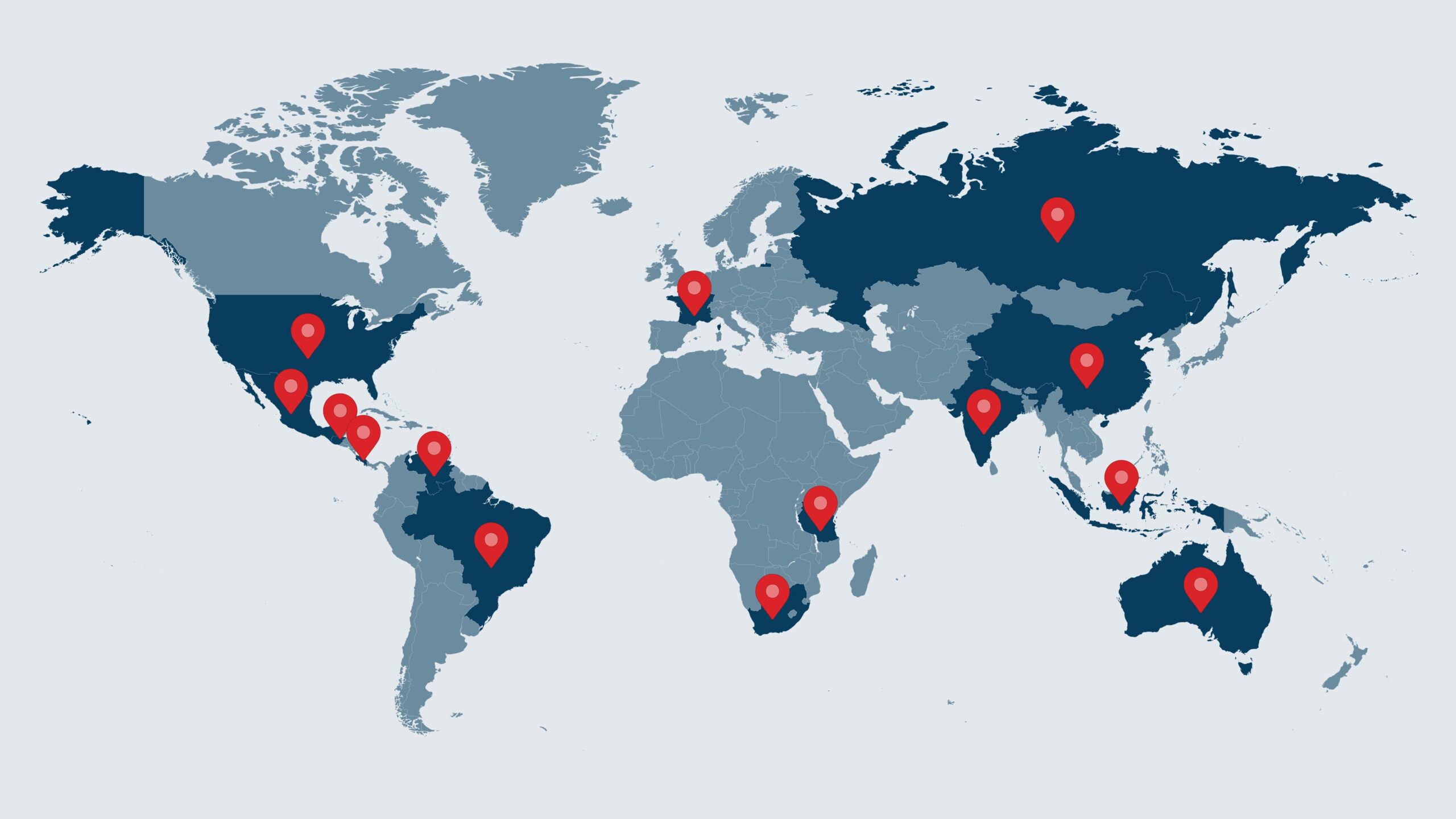
Morning everyone. We’re pretty heavy on events in Africa and Latin America this week, and not from countries that are the usual suspects, either. Hop on for a trip through Dar es Salaam, San José, Jakarta, and Guatemala City!
- Let’s start things off in Australia, where, fresh off the merger of two institutions in South Australia to form the University of Adelaide, Western Australia is musing about merging two or even three of its universities to create a mega-school of its own. Allegedly, there is a cost-benefit study which backs this idea, but nobody has seen it.
- A couple of weeks ago, Azim Premji University, a private university in Bengaluru, released The State of Working India 2026, and it is fantastic. See especially chapter 3 on the graduate earnings premiums (high but falling for men, high but rising for women) and chapter 4 on access to higher education, which I think is the best and most complete short survey on the subject for India ever made (good news: overall participation gaps by income are narrowing, bad news: they are still pretty enormous in the most prestigious fields of study). This piece is a model for looking at access and graduate labour market outcomes: I wish more countries had something this good.
- How awful is Bolivarian economics? Well, it turns out that the average professor’s salary in Venezuela is now down to about $1/month, down from $2500/month near the turn of the century. A protest was held last week to convince the new Venezuelan government to act on this issue.
- To Guatemala City, where the election of the rector at Universidad San Carlos (USAC), the country’s only public university, held a rector election on 8 April in which the sitting rector Walter Mazariegos was seeking re-election. The opposition won 21 of 34 electoral bodies but the university’s governing council — controlled by Mazariegos’ allies — invalidated enough opposition victories to produce a pro-Mazariegos majority. This isn’t just an issue of internal politics: the rector of USAC sits on the commissions that appoint Guatemala’s senior judges and Attorney General, and Mazariegos is allied to a number of the country’s conservative anti-democratic politicians. The election was accompanied by campus occupations and other violence, but Mazariegos has nonetheless been confirmed for a second term.
- Just down the road in San José, there is a humdinger of a story about that country’s lack of a funding formula. You will recall how last issue of The Fifteen we visited Costa Rica to look at Fondo Especial para la Educación Superior (FEES), a substitute for a funding formula in which the country’s five public universities are required to unanimously agree on how to divide public funds between them. The government tried to make an increase of funds conditional on Universidad Costa Rica accepting a cut to its 50% share of resources, a deal UCR rejected. The lack of unanimity throws the decision on funding back to the government, which is inclined to freeze all universities. Students blamed the UCR rector for the impasse and attacked his office, but protests have since spread to all universities in the country. More to come on this…
- Remember just a couple of weeks ago when Russian rectors were being told they needed to deliver 2% of their student body as recruits for the faltering Army? Well, as Russian losses have increased over the last couple of months, the pressure to hit those targets quickly is mounting. Understandably, students are not keen.
- The French government has finally figured out a way to funnel more money to cash-strapped institution, and that is to require institutions to actually charge significant fees to non-EU students (such fees are not new but most institutions choose to grant exemptions).
- There was a #MeToo-ish scandal at Universitas Indonesia last week when a number of law students were caught making offensive sexual remarks about a number of female students and professors in a WeChat group. The incident sounds similar to the scandal in the Dentistry school at Dalhousie University a few years ago, but the denouement – a round of suspensions and the offending students forced to do a perp walk and apologize directly to female students at the institution – was not, and needs to be seen to be believed (video footage here). Coming close to another major harassment case at a University in West Java, the incident has prompted a round of soul-searching about gender relations in Indonesia.
- Here’s a new one: the Government of Tanzania has announced plans to make degrees assets against which students can borrow. That kind of language usually gets used as a way to push student loans (particularly the income-contingent variety), but here Tanzania has something very different and much more radically. Essentially, the proposal is to give every new graduate the right to get some kind of loan for start-up business financing (or “income-generating activity”. It’s an interesting idea, but even if the program manages to match Tanzania’s student loan recovery rates (high for Africa but low compared to richer countries), this could be a very costly policy. One to watch for sure.
- There are so many strikes in Brazil right now that it is hard to keep track. Two unions — FASUBRA (representing technical-administrative staff at federal universities) and SINASEFE (representing staff at federal vocational/technical institutes) — have gone on strike due to the federal government’s failure to fully honour settlement agreements signed after a 2024 strike wave. As of 24 April, the strike has affected over 50 institutions with libraries, cafeterias, and university hospitals being the main services disrupted. The government passed a law in March which it says meets many of the terms of the 2024 accord, but the unions describe the measures not just as inadequate but actively beside the point. Meanwhile at Universidad Sao Paolo, students are on strike over issues like scholarship cuts and staff-student pay inequities.
- Staying in Brazil for the moment: for many years it was noted that free federal universities – the ones at the top of the academic pecking order in Brazil – were overwhelmingly white and rich, making the free tuition subsidy regressive. Years of quota policies have changed that, making elite institutions much more racially and socially mixed. (And, it turns out, quota students actually tend to graduate at a higher rate than non-quota students). You will be shocked, I imagine, to read this story which claims that richer Brazilians are no longer as keen to go to public universities, because they aren’t seen as sufficiently exclusive.
- From China, two articles on the management of talent development. The first describes how China culled 1,773 university programs last year, mostly in fine arts, humanities and social sciences (on grounds that these fields will required fewer personnel in an AI-enable future) while at the same time opening hundreds of new programs in AI, the digital economy, smart manufacturing, and big data management. And another about the role of “skills intermediaries” – that is, industry associations, vocational education groups and the like – in training in-demand specialists.
- Mexico has a new five-year strategic plan for higher education. It’s pretty turgid reading and it’s not exactly what one would normally call strategic (it contains 25 strategies and 147 separate lines of action and not a single one of them is about doing less of anything) and there’s nothing at all about new funding, so…
- South Africa’s Mail and Guardian published a couple of interesting articles on governance in that country’s higher education system. The first argues that big changes need to be made to prevent “institutional capture” (a subject we covered on the podcast back here in an interview with Dr. Jonathan Janzen) and the second argues that South African university governance, the product of a transitional post-apartheid settlement, is badly in need of an update.
- Yale University’s report on trust in American higher education was maybe the biggest story in the US over the last couple of weeks (even though it wasn’t a particularly good report). But the biggest story in the US without a doubt is President Trump’s decision to fire the entire National Science Board. The move seems designed to strengthen presidential control over the disbursement of individual grants and, probably, to avoid spending all the money that Congress appropriates for the agency.
That’s it for this round of the Fifteen. See you again on May 15.