


Morning all. Next week, we will be launching The World of Higher Education – Year in Review 2025, which is our new global equivalent to The State of Post-Secondary Education in Canada. As a document, it’s less data-driven and somewhat more narrative-driven than what you might be used to from HESA, but we think that you’ll enjoy it. And, as a treat today, I wanted to show you some of the data, specifically on enrolment, which suggests that big changes may be afoot in global higher education.
Since World War II, higher education has been built on growth: growing budgets and growing student numbers. It’s been clear for a while now that both budgets and demography have been working against the sector for some time. But what’s really interesting is that we are starting to see student numbers collapse in places where demography wouldn’t necessarily indicate a problem, and that heralds some (potentially) really big changes ahead for the sector.
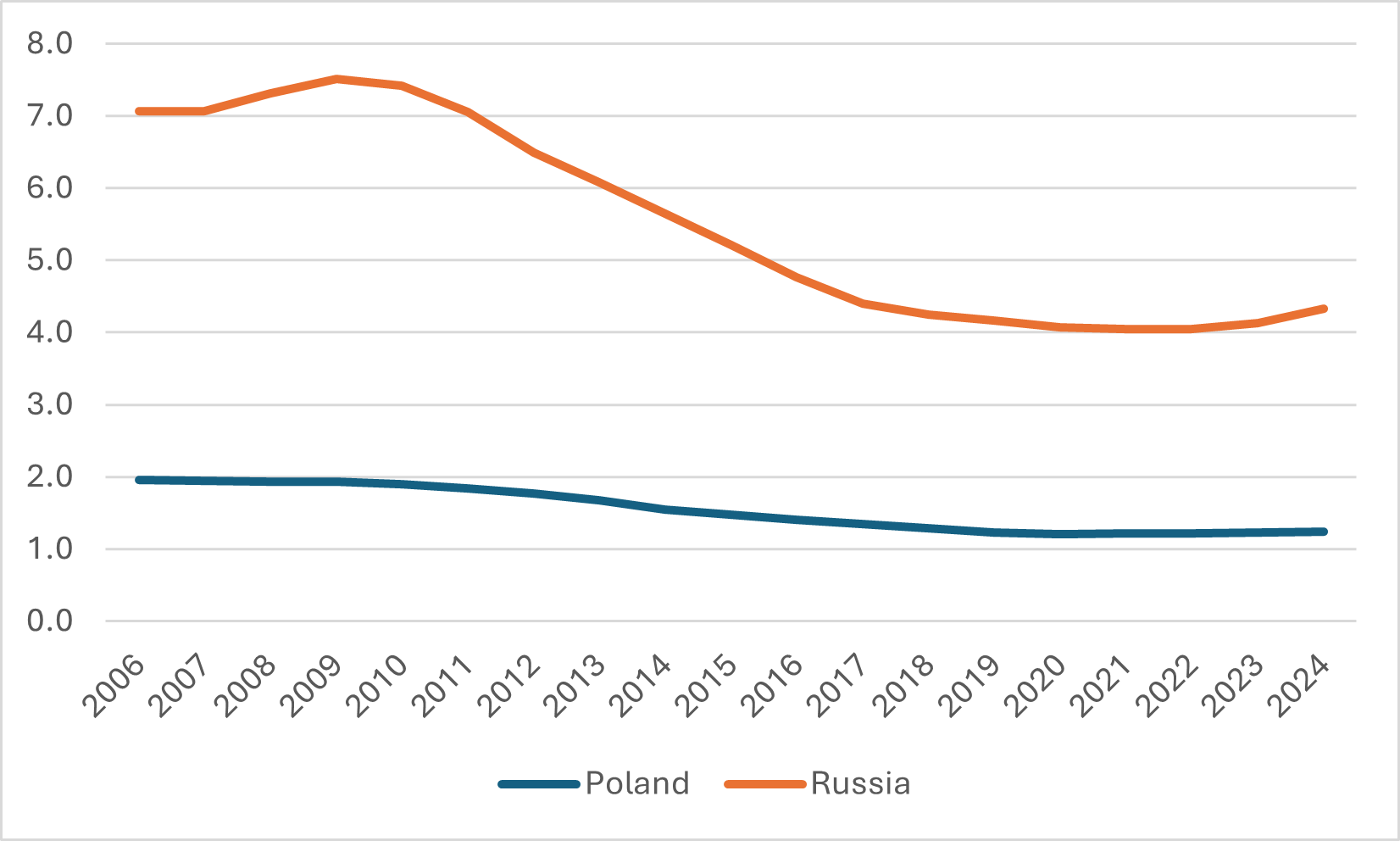
When we think about countries undergoing big demographic changes, we usually think about places like Russia and Poland, which underwent a huge fall in their birthrates after the end of socialism in the early 1990s. This started showing up in university enrolments about 18 years later, at the end of the 00s. In both countries, the number of students has declined by about 40% since that time (you get similar results for places like Ukraine and Romania, by the way).
Figure 1: Total Enrolments in Millions, Russia and Poland, 2006 to 2024
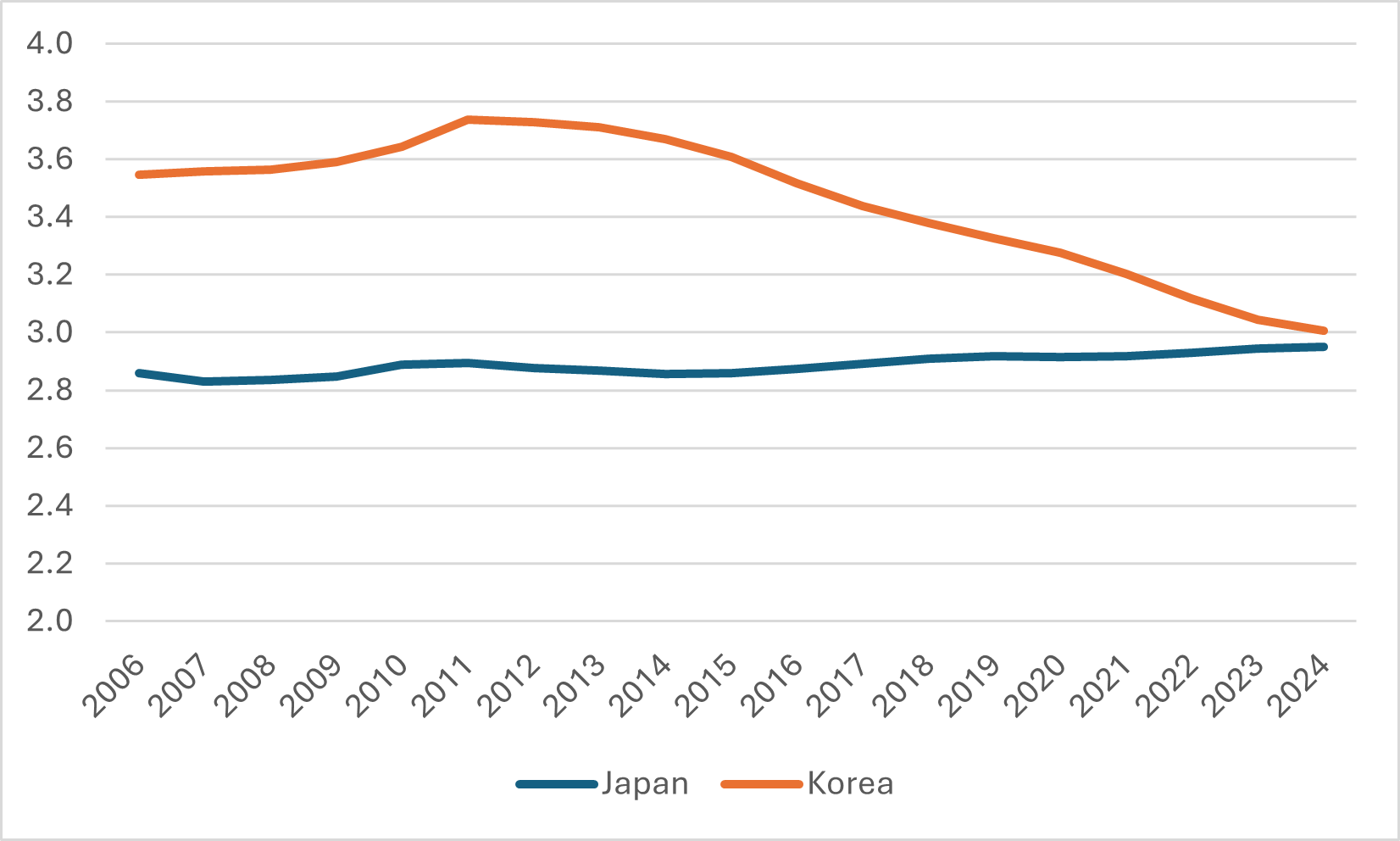
We also think about places like Korea and Japan which are widely known as aging societies. But aging societies age slowly; to some extent, declining youth populations can be offset by higher participation rates, and, to a lesser extent, by international enrolments. As a result, Korea has seen a much more attenuated decline than Russia or Poland, and Japan has yet to see one at all.
Figure 2: Total Enrolments in Millions, Japan and Korea, 2006 to 2024
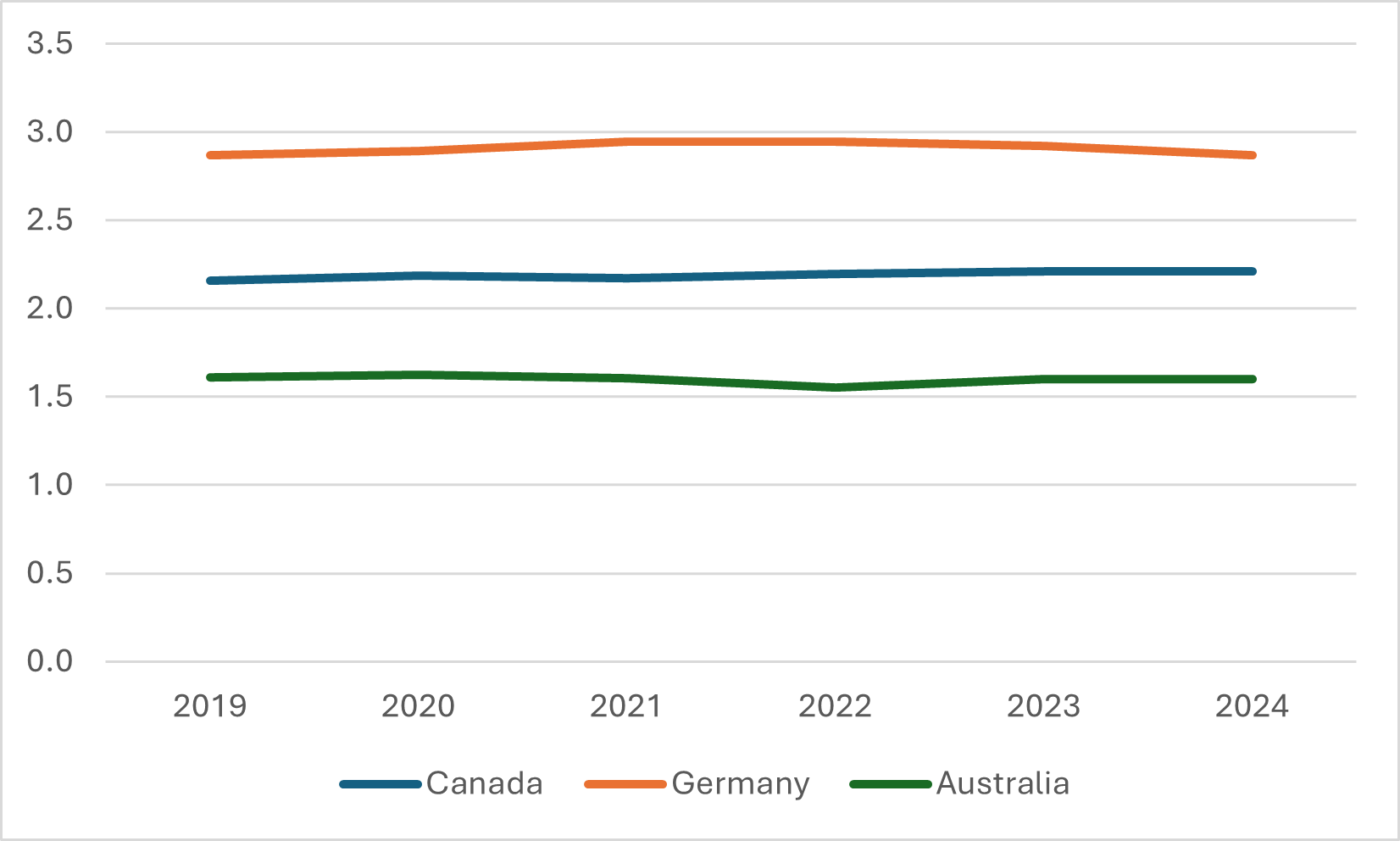
More recently, there are a few countries which are – if not declining – then flatlining. The three key ones are Germany, Canada, and Australia, and in the latter two – where international student numbers prop up the total – the likelihood is that domestic student numbers are actually declining. The United States would be in this group too, but it finally saw a rebound in enrolments in 2023. That said, current enrolments in the US are still below their level from 2009-2018 and about 7% off their all-time high, posted in 2010-11.
Figure 3: Total Enrolments, in Millions, Canada, Germany and Australia, 2019 to 2024
Now, let’s get to the really interesting cases. There is a belt of countries in Asia – Turkey, Iran, and Pakistan – which have seen recent and fairly sudden collapses in enrolment that are historically pretty much unprecedented. The question is whether this is a single phenomenon or three slightly different phenomena occurring in countries in roughly the same part of the world. I tend to think it is the latter, but I’ll let you decide.
Figure 4: Total Enrolments, in Millions, Turkey, Iran and Pakistan, 2006 to 2024
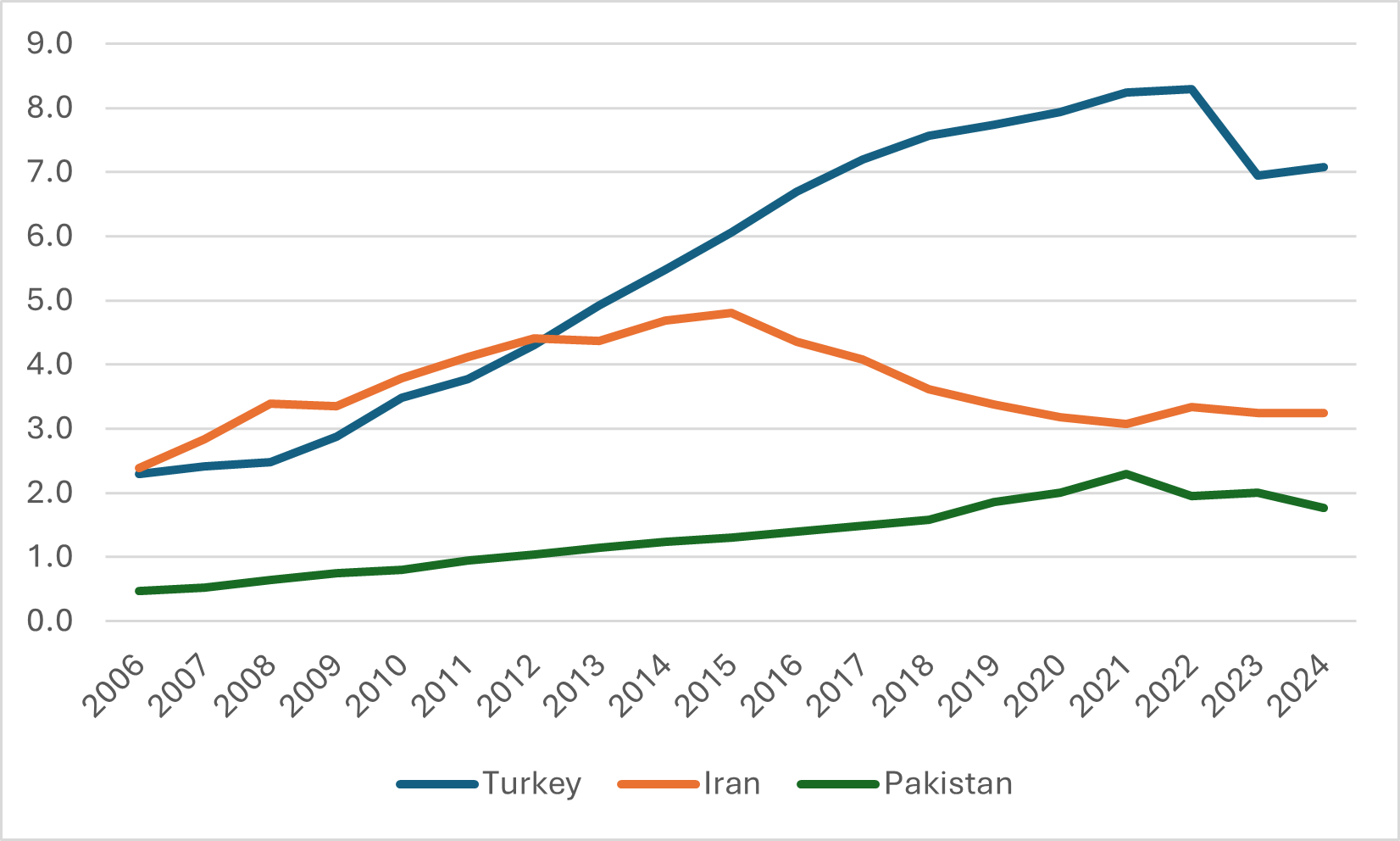
So, let’s start by asking whether this might be about demographics, as in Russia and Poland. It definitely is not in Pakistan, where youth numbers are still increasing, nor in Turkey, where they are pretty stable. Iran is a different story because it saw a rapid fall in the birth rate in the 1980s that mostly explains the decline (the timing isn’t perfect and Iranians I have spoken to about this have all said effectively that the system was overbuilt and student numbers went down in part because of poor rates of return).
But if not demographics, how do we explain Turkey and Pakistan, both of which have seen double-digit declines in the past five years? In both cases, the answer seems to be “economic crises caused by inflation”. In Turkey, a set of rapid tuition rises in the private sector seems to have been the culprit. In Pakistan, where student financial aid is essentially non-existent, a rise in prices has both left students unable to pay fees and universities in a situation where they have difficulty accepting any more students (earlier this year the state of Peshawar actually banned its universities from continuing to recruit new students).
I don’t think that all of this quite adds up to a “trend”. There are lots of different factors at play when student numbers decline, and there are certainly lots of countries where enrolments are still rising pretty quickly (China, India, and Brazil being the most important). But, I don’t think it’s exactly comforting that roughly 10 of the world’s top 25 higher education systems are essentially stalled or in reverse – more if you include Colombia and Spain, which arguably belong in this category too. I think we’re in a new, multi-speed age in global higher education, one where national systems are no longer all heading in the same direction. From here on out, the dynamics get more complicated.