


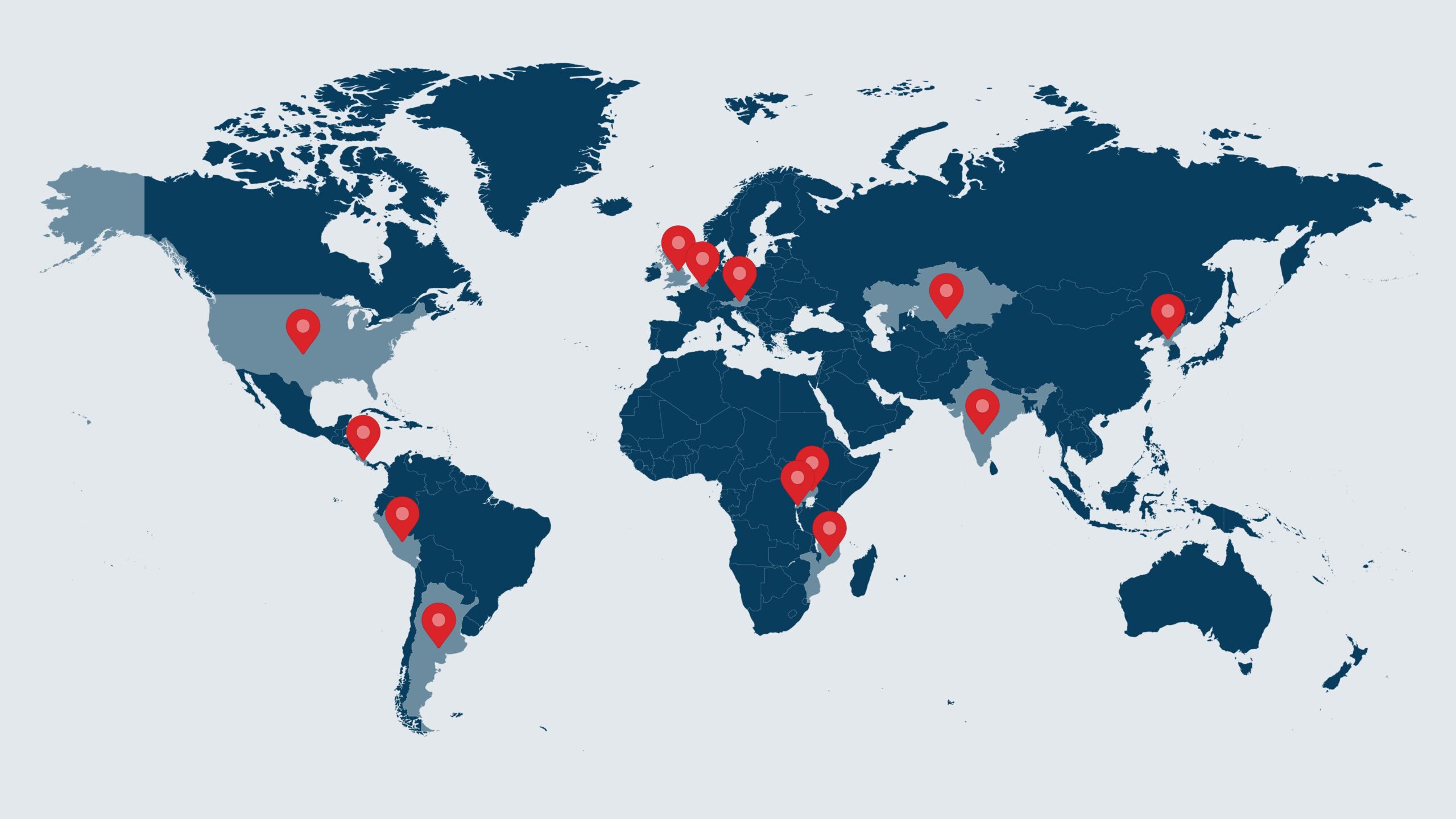
Welcome to The Fifteen, a global round-up of the stories animating higher education institutions and systems around the globe. Let’s get to it.
1. To Pyongyang, for a story about how a tightly-controlled, top-down, secretive admissions process leads to a system of rampant bribery, with parents paying party officials both for information and to get their children’s high schools added to the lists of potential admissions at the “right” universities.
2. Panjab University in Chandigarh is in a battle over its autonomy, and it is probably the biggest story in higher education anywhere in the world this month. In late October, the Union Government reduced the number of Senators and eliminated elections to the Syndicate (basically, the executive committee of Senate). The University didn’t fight the order – the VC probably liked the bits making the Syndicate less political – but students, who exercise power through the elected members of Senate, went bananas. Students occupied the campus on November 10th, even though the Union Government rescinded the restructuring order two days earlier. The issue metastasized into one of local rights vs. centralism – always an issue in Sikh-majority Punjab – which has pulled a lot of non-students into the fracas, and which some suggest has turned students into pawns in a lager political game. The students continue to occupy the campus, which has now started to disrupt the exam-taking process. This story has a ways to run.
3. Some very disturbing news from Latin America. In Costa Rica, two of the country’s five public universities have received email threats of armed attacks on their campuses. And in Argentina, two campuses received attack threats bearing the numbers “764”, a somewhat shadowy organization that is described as being involved variously in sextortion, sadism and terrorism.
4. Staying in the realm of the gruesome for a bit, let’s go to Zimbabwe, a country where student union elections are battled by student electoral groups which mirror national political parties. A pair of aspiring student politicians affiliated with opposition were kidnapped and beaten by students loyal to the ruling ZANU party. ZANU of course denies all involvement.
5. Arizona State University is everywhere. It just announced plans to open a campus in London’s Docklands (incorporating a not-especially successful Engineering school it opened there four years ago), and – in partnerships with the Government of Kazakhstan – is opening a new university in Almaty called InnoTech, which will offer double American/Kazakh degrees at both the undergraduate and graduate levels staring next fall. You have to admire the drive.
6. Back to Argentina for a moment. President Milei is still pretending that Congress didn’t override his veto on the bill designed to double the funding of the country’s universities. Instead, his budget proposal for the year is about half what the law suggests it should be. Cue another wave of 48-hour strikes from academic staff.
7. Access to universities in Rwanda has always involved a lot of waiting around. Admissions are regulated by exams which take place in July; with processing times and deadlines, that means most students have historically then had to wait 12 months for the next university intake. Now the government has decided to get rid of the wait people and allow students to go directly to university. But that means a double intake this year, which is causing delays to the start of the academic year. Complicating things still further: the University of Rwanda, which is by far the largest institution in the country, is currently trying to diversify funding away from government sources in a way rarely seen in African public institutions
8. Two good new pieces out this month on education and social mobility. The Sutton Trust’ Degrees of Difference looks at changing patterns of social mobility across nine key countries around the world (including Canada). Key recommendations include recognizing that higher education is always embedded in a wider set of social and educational relationships, paying more attention to widening access at the most selective institutions and above all improving data collection. The Widening Access to Higher Education Network also released an interesting exercise in mapping educational inequalities around the world, which is only slightly marred by the fact that the authors cannot draw Canada for toffee (it looks like someone rolled a toque downwards from Ellesmere Island down to a line stretching from Prince Rupert to Cape Breton. Click on it and look if you don’t believe me).
9. This article, from the website Poets and Quants, is quite a nice little piece about why the success of individual institutions is to some extent the result of being embedded in a strong educational ecosystem with diverse institutions.
10. Skills alignment is on the agenda across Africa. Two weeks ago, The Fifteen noted plans in Senegal to shake up university teaching in part because of concerns about relevancy. Now, in Uganda, President Museveni has urged institutions to stop teaching “irrelevant courses” and comply with government attempts to move universities towards to a competency-based education system, while down in Mozambique, President Chapo called for something similar noting that “the time when a university diploma automatically guaranteed a job has come to its end”.
11. Austria, like many countries in Central Europe, divides the duties of degree granting between universities (involved in basic research and offers doctorates) and “universities of applied science” which focus on bachelor’s level education. That might be about to change as two provincial governors are now lobbying the country’s science minister to change the law and permit the latter to award doctoral degrees.
12. Over in Belgium, 15-year old Laurent Simons just defended his doctoral thesis at the University of Antwerp. In Quantum Physics. Really.
13. In Peru, the government has informed the universities that they would be taking a cut of s/288 million this year (which I make out to be about 4% of total). It doesn’t sound that bad until you realize the government is paying for ten new universities inside this sum as well.
14. There has been an interesting discussion around the role of departments in academic governance in the United States this past week. It started when an English professor there wrote a piece for the Wall Street Journal decrying the idea that Montclair was getting rid of various humanities departments (barbarians at the gate, etc). The Chronicle of Higher Education took a deeper look at the subject and found that all was being eliminated was departmental structures: no courses or programs were being eliminated, but English was being merged into a larger unit. It’s a balanced look at the pros and cons of lining up administrative structures with disciplinary boundaries – and it’s a worthwhile read.
15. It looks as if the UK government confirmed that is going to go ahead with its international student levy, a scheme under which the government will levy 6% on the tuition fee of every international student, with the proceeds going to re-introduce a system of maintenance grants for students, which never should have been eliminated in the first place. Universities are arguing that this is a bad idea, because it “won’t help universities”, as if the government wasn’t perfectly aware of this. In fact, the government is acting deeply holier-than-thou about the whole thing, effectively claiming that something needed to be done on maintenance grants, and this robbing-Peter-to-pay-Paul manoeuvre is something so what is everyone moaning about? Good times.
And that’s it for the Fifteen this week. See you back here on December 12th.