


A quick reminder before we get to our regularly scheduled programming: On Wednesday, I told you about the National Defence Research Roundtable HESA is proposing to host on December 15 in Ottawa. We’ll be closing the expression of interest form at 3pm EST today. Interested in joining us? Click here and let us know.

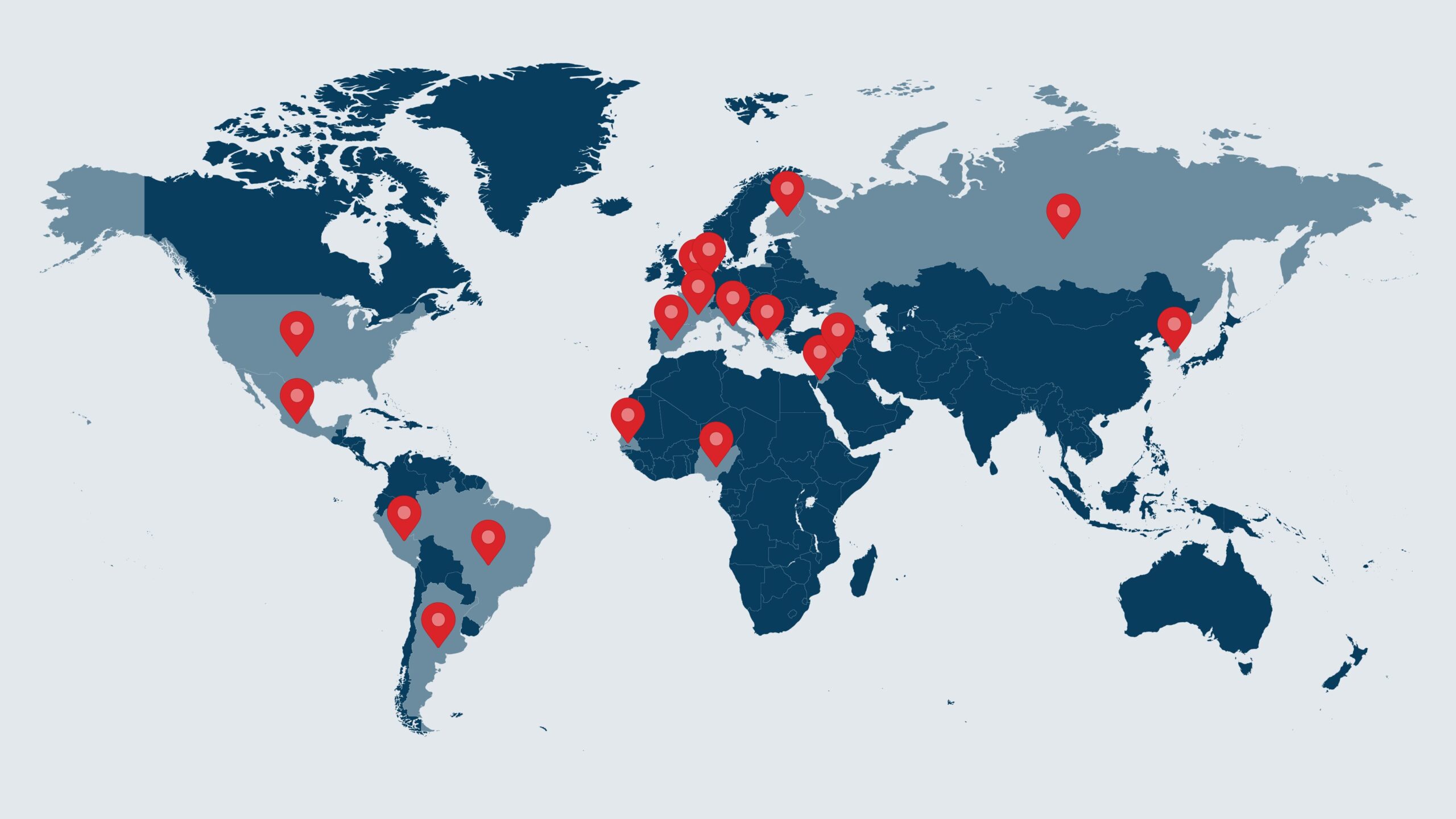
Welcome to The Fifteen, a global round-up of the stories animating higher education institutions and systems around the globe. Let’s get to it.
1. In Greece, the day of reckoning has come for over a quarter-million “eternal students”. In accordance with a law passed a couple of years ago, over 285,000 students who do not attend classes but have maintained student status in order to gain access for various benefits linked to “studentness”, are being kicked off university rolls this month.
2. This is a pretty good article on how Moscow’s Higher School of Economics – once a pretty good school and a reliable bastion of liberal thought – has been steadily and deliberately destroyed by its new Kremlin-installed rector.
3. Peru has adopted legislation allowing the creation of “intercultural” universities. This is a type of institution – common in Latin America – specifically for (and usually managed by) Indigenous Peoples, akin to American Tribal Colleges. Meanwhile in Brazil, President Lula da Silva announced the creation of a national multi-campus Indigenous university.
4. Speaking of new universities: remember about eight weeks ago when the President of Nigeria put a seven-year moratorium on new universities, and I said it wouldn’t last 12 months? Well, it turns out it didn’t even last 12 weeks. Last week, the President signed into law a bill creating The Federal University of Technology in Lagos State.
5. As Trump’s Compact seemingly fades into nothingness after not a single serious university could be persuaded to sign on, the Administration has gone back to bullying universities on an individual basis. This week’s victim: Cornell. Meanwhile, a number of institutions are starting to implement major layoffs due to Trump cuts; more is clearly coming (Harvard’s Faculty of Arts and Science alone apparently has a deficit of $350 million). But not all cuts trace back to Trump; at the University of Chicago, the rot goes back over a decade.
6. Here’s an interesting story from the Times Higher Education on the continuing expansion of branch campuses around the world. Certainly, this year seems to have seen the return of rapid growth, but what’s interesting is how countries which until recently only hosted international campuses are now starting themselves to open campuses abroad. The new Kazakh university that opened in Russia this summer is maybe the most interesting example. Canada is, of course, mostly MIA.
7. The Government of Wallonie-Bruxelles is now requiring institutions to have specific penalties for cases of violence/sexual violence, which include campus bans of up to three years. In Nigeria, the Senate passed a bill stipulating jail terms of up to 14-year for sexual harassment in universities (why a separate penalty for sexual harassment specifically in universities? Excellent question.)
8. This story was all over the news in several Asian countries in the past couple of weeks: in South Korea, universities are starting to reject student applicants on the basis of their K-12 school discipline record. Have a history of violent bullying? You may not get admitted to the college of your choice.
9. Not to be outdone by the establishment of a new sports university in La Plata by Juan Sebastian Veron (see The Fifteen, October 31), the University of Buenos Aires last week held the world’s first academic symposium on the subject of Diego Maradona. Olé!
10. Cash crunches in Europe: in France, we’re back to having regular warnings about how budget systems are “near collapse”, and while the Minister of Higher Education agrees that things are difficult, he notes waspishly that “ce n’est pas Zola non plus.” (gotta love a Dreyfus affair reference). Meanwhile, things are at a breaking point between Madrileno universities and the regional government. After 17 years of below-inflation budget rises several universities – most significantly Universidad Complutense de Madrid – are on the brink. A two day strike has been called for later this month.
11. Italy is rolling out modifications to its peak higher education regulatory agency, known as ANVUR. There is a lot of talk about streamlining, efficiency, etc., but many see an erosion of institutional independence. Down in Senegal, the government has launched a massive consultation process known as L’Agenda national de Transformation de l’Enseignement Supérieur, de la Recherche et de l’Innovation (ANTESRI) and is also talking about a “complete revamp” of higher education. The actual measures under consideration are pretty vague – more Indigenous science and fewer unemployed graduates seem to be the two big themes – but the government keeps using words like “radical rupture” to describe what it has in mind. One to keep an eye on, anyway.
12. I’ve been saying for awhile that universities arguing for universities is a losing strategy, but a broad coalition of knowledge organizations arguing for the knowledge economy as a whole is a winning one. It just so happens that the Netherlands has such as an organization, the Kenniscoalitie (Knowledge Coalition), which took an active role in last month’s election. By complete coincidence, that election threw out the far right and some think things could now be looking up for universities.
13. From the Middle East: Jordan has a reasonably large public university sector, but it is overwhelmingly funded through tuition fees. This article looks at the affordability implications of that policy. And from next door in Syria, here’s a quite harrowing article about violence and human rights abuses at universities there.
14. New data out of Finland shows that despite having no tuition fees and universal eligibility for at least some grant funding, two-thirds of students graduate with debt, and the average amount of debt at graduation was €23,658. Both of those numbers are higher than mean old neoliberal Canada. (Lesson: if you offer students loans, they will take them and worry about the consequences later).
15. Two big stories out of Mexico. First, the President Claudia Sheinbaum re-iterated both her desire to see student numbers to go way up, and her lack of desire to spend anything, telling universities that they needed to “set aside extravagance” and “work with austerity”. As a partial alternative to spending on universities, her government is setting up something called SaberesX an online platform to provide free online continuing education .
And that’s The Fifteen for this week. See you back here on November 29.