


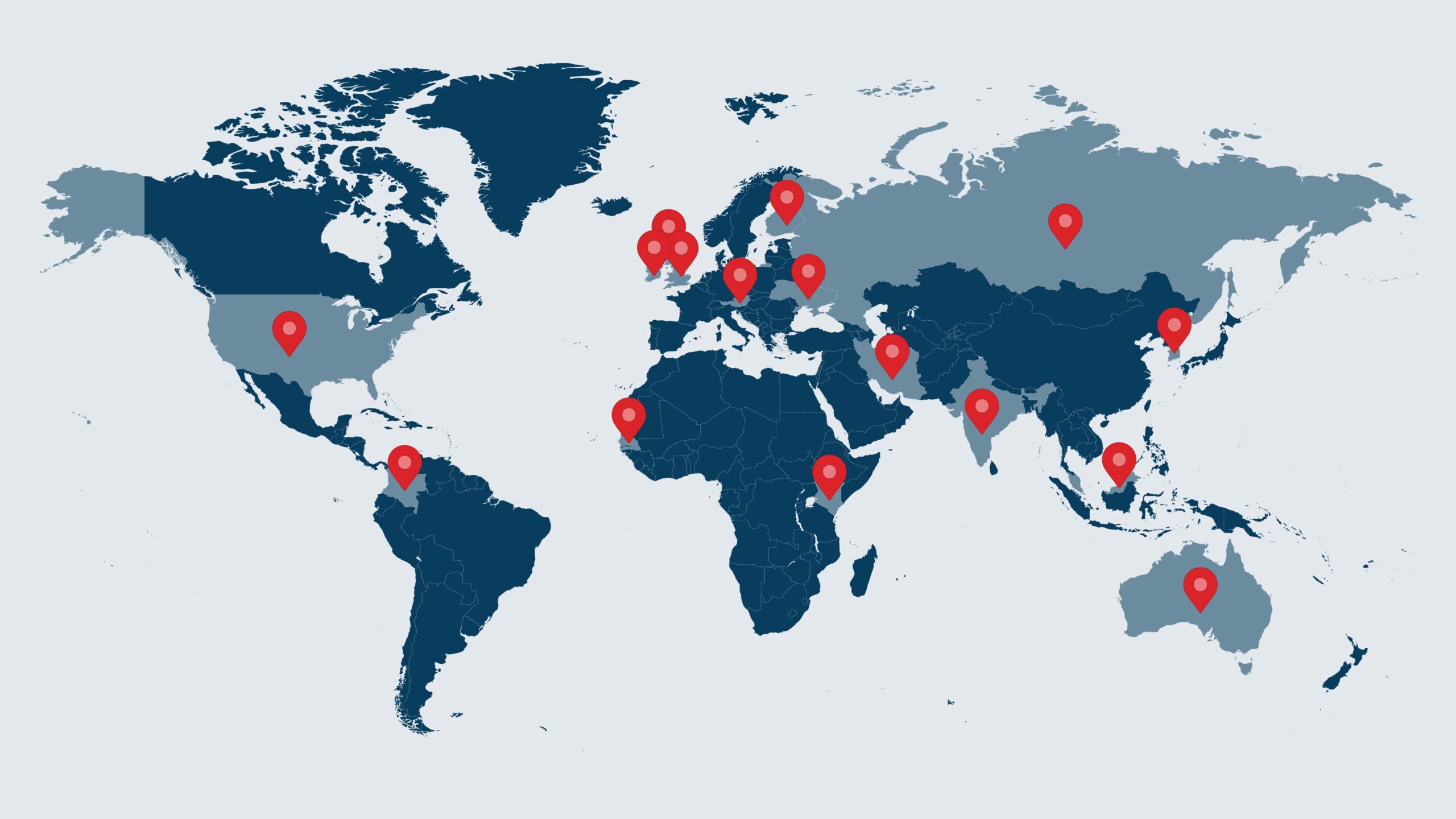
Gather ‘round, all! This edition, we have absurd policy proposals from Australia and the UK, deceptive military recruitment practices in Russia, a battle over a rectorship in Colombia, and free McDonald’s meals for students in Malaysia. Let’s get started.
- In Malaysia, McDonald’s has reacted to reports of widespread student hunger with a pledge to give away 1 million free meals to students over the course of 2026. The meals will comprise of rice, curried potatoes, an egg, Spicy Ayam Tenders (an Asian McNuggett, basically) and Iced Lemon Tea.
- The Scottish government has announced the 15 members of its “Future Framework” team that is meant to create a 20-year plan for funding higher education in the country. Scotland is committed to zero tuition fees but it’s very hard to work out how the country can funding universities without them. Scotland joins Austria and Finland in spending this year having government-appointed teams draft long-term higher education plans.
- The Australian Human Rights Commission dropped a bombshell of a report on that country’s higher education sector entitled Respect at Uni: A Study into antisemitism, Islamophobia, racism and the experience of First Nations people. The report leaned heavily on a survey that included 20 percent of the country’s university staff and three percent its students in which fifteen percent indicated that reported experiencing direct interpersonal racism and roughly seventy percent reported “indirect” racism against their racial, ethnic, cultural or religious groups. The report also found very little in the way of anti-racism policies at universities or workforce diversity strategies (apart from some focusing on First Nations).
- ABSURD MICROMANAGEMENT ALERT: While you might think that previous story might be enough to focus Australian politicians’ attention on concrete reforms to combat racism, this is unfortunately not the case. Just nine days after the release of the report, Liberal Shadow Education Minister Julian Leeser stood up in front of a Universities Australia Summit looking for headlines and announced his party’s opposition to…wait for it…group assignments in universities. They should be banned, apparently, on the grounds that students dislike them. Oy.
- Here’s a great piece from Eric Klederman at the Chronicle on the Trump Administration’s plan for changing higher education accreditation in the United States. It’s about as gruesome as you’d expect.
- In Georgia (the country not the state), the government has backed off its plan – reported in the previous Fifteen – for merging Georgia Technical University and Tbilisi State university due to public backlash. The government is also using its “One City, One Faculty” plan for rationalization to basically eliminate Ilia State University, by depriving it of 92% of its paid spaces. Cue protests. Meanwhile, institutions which are more government-aligned are being permitted to offer funded courses in something called “Astrolinguistics”.
- Earlier in February, University College London reached an out-of-court settlement with students who had file a class action suit against the university for failing to meet proper teaching standards during COVID. The settlement was apparently worth in the region of £21.5 million (based on a payout of about £5000 per students). This prompted students at 36 other universities to set up class action suits, a matter which could cascade into a hit to universities of £500M-1 Billion, a hit the sector can ill-endure due to its precarious financial state. The fun has even spread to Ireland, where a legal firm has set up a copycat lawsuit.
- New figures from the government in Kenya suggest that the overall financial state of the country’s higher education is much worse than everyone thought. Earlier estimates put the problem at between 80-100 billion KShs (current exchange is 1 USD = 128Kshs), but apparently this was only the figure for universities themselves. Add onto that debts at the Higher Education Loan Board of KShs 112Bn (plus another anticipated deficit of 67 billion KShs for the coming year). The system of scholarships that underpinned the student-centred funding model introduced two years ago is also only funded at about 36% of anticipated demand. It’s very unclear how the country climbs out of this hole.
- In South Korea, the never-ending controversy over the expansion of medical schools continues. Recall that medical students boycotted classes for over a year in protest at the government’s expansion of medical programs (ostensibly this was because of fears of quality of education but, hello…rent-seeking much?). The government pulled back its plans, but now the expansion is being criticized because of class overcrowding caused by all the older medical students having to re-take a year lost because of the boycott.
- In India, the higher education media spent most of February obsessing about one university’s fraud at a major AI conference. The story began when a team from Galgotias University, a private institutions in the Delhi’s south-eastern suburbs, displayed a robodog at its booth which was in fact Chinese-made and was made to withdraw from the conference. This led to an orgy of self-flagellating stories about how private universities are all frauds, how India is lagging in knowledge and innovation…basically, whatever anyone wants to beat the Modi government for on higher education, this has been the club of choice for the last two weeks.
- In late February, following the Iranian tradition of protesting at the end of 40days of mourning, students in many cities used the 40th day after the January 8-9 massacre to resume protests against the regime. The protests continued without too much basic opposition for the first couple of days, with students even winning a meeting with the country’s Vice-President to make their case, but by day 4 clashes between students and security police were occurring all over the country. Faced with this challenge, the government told universities to begin moving classes online in February 25th, before closing them completely just before the American/Israeli air attacks began.
- Russia is stepping up its military recruitment efforts at universities, often using misleading sales pitches which falsely suggest students will not be sent to the front line. The very interesting T-invariant website has also published a very good (and long) article comparing the fate of academic freedom in Ukraine, Belarus, and Russia since the start of the (second) invasion in 2022.
- The National University of Colombia has been an interesting place lately. In March 2024, Ismael Peña won an internal election to be rector over the students’ favourite Leopold Munera. With the help of Colombian President Petro, they convinced the University Council to undo the vote and made Munera president instead (this article from El Pais is good for the backstory). Nearly two years later, Pena won a legal battle to win the post. Students have now called for a strike through to March 20th to protest the decision. Pena’s response: “students want to think I am the devil, but I am not.”
- In Senegal, protests over student bursary payments being months in arrears (see The Fifteen, Dec 12, 2025) took a nasty turn at Cheka Ante Diop University when a confrontation resulted in the death of a medical student at the hands of security officers. Students at all the country’s other major public universities quickly went on a three-day strike. The government promised an inquest, but it also immediately suggested putting a police station on campus and a program of “délocalisation”, meaning making the 100,000-student university smaller by moving some elements to new locations, which did not win universal approval.
- The United Kingdom’s student loan system made some kind of wonky sense when it was introduced in 2006. But between raising tuition fees and introducing interest rates in 2012, removing maintenance grants in 2016, and gradually lowering the real value of the threshold at which students begin repayment from 2022 onwards, the system has become totally indefensible. The opposition Conservative Party, having overseen nearly all of this policy vandalism when in government from 2010 to 2024, have proposed a new policy, which is to reduce student loan interest and pay for it by cutting 100,000 students places across the country. And this is supposed to be popular.
That’s it for now, everyone. See you back here on March 20.