





Just a quick reminder before we move into the one thought of the day: we’ve officially launched HESA’s Transnational Education (TNE) Strategy Project and are now looking to finalize our founding cohort of member institutions. If your institution is exploring (or re-examining) transnational education as part of its future strategy, we’re inviting expressions of interest by February 23. You can learn more about the project here.
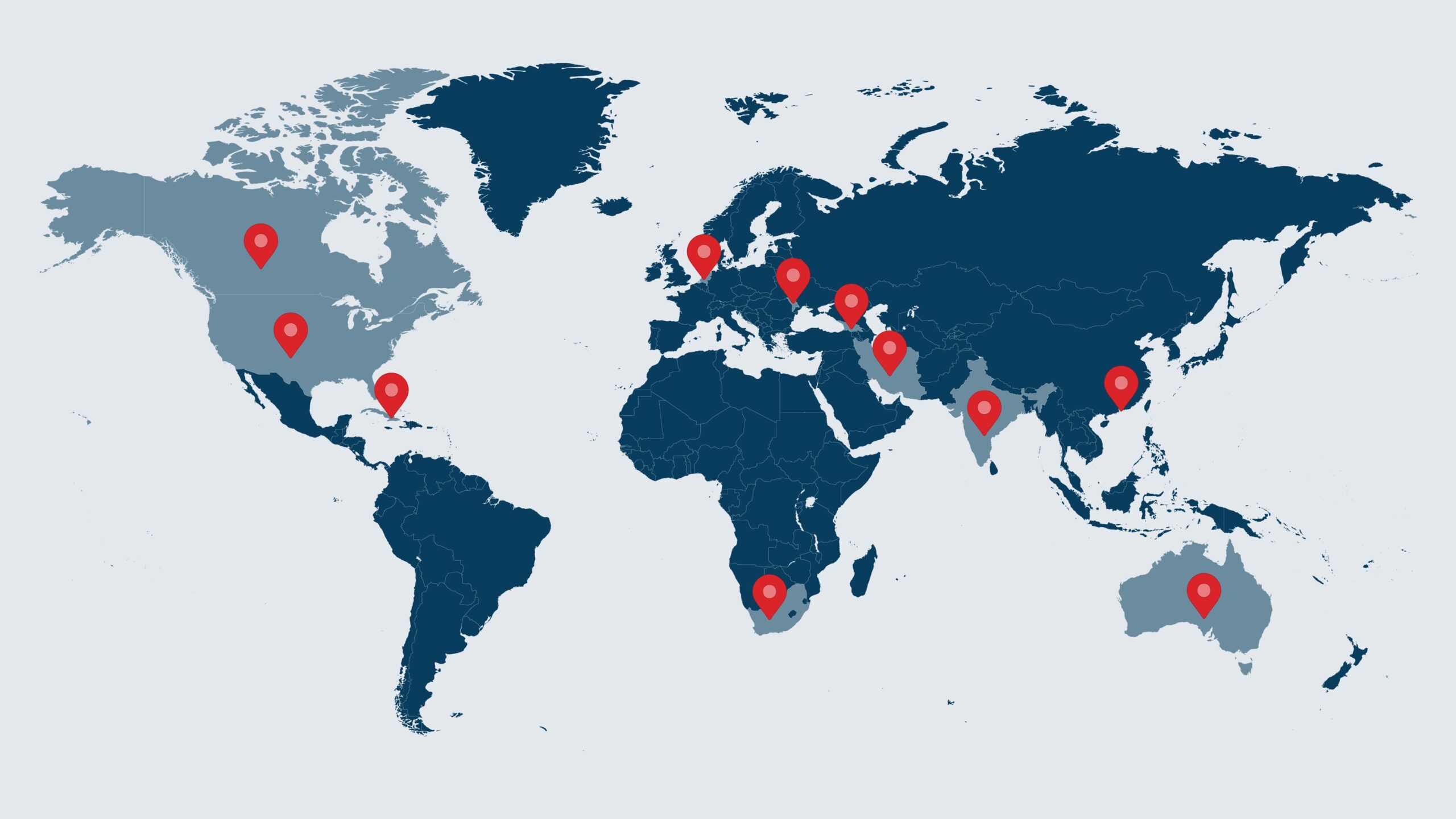
Good morning. Not much of a unifying theme to this issue of The Fifteen: there is quite simply a diverse amount of weird, awful, and wonderful stuff happening all over the world. Let’s take a look.
- The veil over Iran is lifting somewhat and it is becoming clear that the death toll from the crackdown on anti-government protests in January was very high: thousands dead, among whom dozens of students. Medical students have continued to find ways to confront the government in the past few weeks; at a number of institutions students have been refusing to sit for exams in recent days. If Iranians use the end of the traditional 40 days of mourning to launch a new round of protests – a characteristic of both the 2023 protests and those that led to the 1979 Revolution – that would mean a large new round of protest may erupt next week.
- For the last couple of weeks, US higher education has been rocked by a series of revelations about various university professors who had contact with notorious child rapist Jeffery Epstein. There was MIT’s Noam Chomsky, as well as a number of Harvard professors, but there were also connections to professors at Yale, Arizona State, and Duke, among others. A University of Texas Austin professor solicited $10,000 from Epstein to support a campus rape policy conference in 2016 (that is, eight years after his conviction for procurement of a minor) and no, that sentence doesn’t get any better no matter how many times you read it. Also, there was the case of Leon Botstein, President-for-Life of Bard College (Neil Sedaka’s “Bad Blood” was the #1 song at the time of his installation in 1975), who apparently visited Epstein’s island in 2012. Epstein was also, of course, a significant donor to a number of institutions and individual scientist, and people are beginning to question what it means that so many scientists were prepared to be part of the monster’s orbit.
- Staying in the US, the state of Oklahoma is moving to eliminate tenure at most state universities. The state flagship, University of Oklahoma, which actually competes in continental markets for faculty, is exempted from the rule. Apparently right-wing ideologues can work out that abandoning tenure would make recruitment impossible, but clearly, they are betting the same is not true for smaller regional institutions.
- New frontiers in university revenue generation: Lucknow University in India has created an Astrology Consulting Centre and started offering paid astrology consultations. The university already offers both Bachelor’s and Master’s degrees in Astrology.
- Staying in India, there is a big kerfuffle at the moment over anti-caste discrimination rules issued by the University Grants Commission. These new rules, issued in January, mandated the creation of equity committees and helplines to combat discrimination at every university. Upper-caste Hindus objected and began a series of protests and appealed to the Supreme Court. The Court decided to stay the regulations and hear oral arguments sometime in March.
- Time Magazine released a global university ranking but somehow avoided actually telling anyone what the specific indicator weighs are, which makes it hard to answer some head-scratching questions like: “how did the University of Manitoba end up eighteen spots ahead of McGill”?. The methodology notes correctly that some of the most useful data is not internationally comparable, but the goes on to explain that its solution is to employ “triangulation” to make nationally-sourced data comparable, which to me sounds a lot like “making shit up”. Also, as rankings guru Richard Holmes notes, the #1 University in the world in the Leiden rankings, Zhejiang University, is mysteriously not ranked at all.
- The Hong Kong Federation of Students has been a bit of a lonely place lately, what with all but one of its members having dissolved themselves because of government pressure. Now, the Federation has dissolved itself, too.
- In Canada’s Nunavut Territory, Inuit Tapiriit Kanatami (ITK), which is the national body representing the country’s Inuit peoples, is announcing plans to open a university in Arviat. Note that this initiative is from ITK and not the territorial government, which runs the territory’s community college, Nunavut Arctic College, which signed a long-term agreement with Memorial University to help develop university-level programming.
- It’s university intake season in the southern hemisphere and that means things are going a bit bananas in South Africa. Surging secondary school graduation numbers plus ongoing funding challenges at the country’s universities mean that many universities are turning away students in hordes. With supply scarce, students are applying to far more institutions than normal which means that individual institutions are rejecting as many as half a million students each, and ending up with acceptance rates lower than Harvard or Stanford.
- There is a new open access book out from Elgar on management theories in higher education. I haven’t read it, but a) the list of authors is pretty good and b) it’s free. Download it here
- The Conversation published an interesting article looking at how countries providing higher education aid to zones recovering from conflict are more likely to provide scholarships than direct aid to institutions, and why that’s a bad idea. Worth a read.
- The fuel crisis in Cuba is leading institutions there to shift to remote learning in order to save energy (and, presumably, to reduce pressure on public transport by freeing students from the obligation to come to campus). Universidad de Havana said on February 6 that all learning will be remote for 30 days; Universidad de Holguin has cancelled exams and told students that in-person classes are suspended “until March”.
- The techno-authoritarian Government of Geogia has announced plans to merge two of the country’s most prominent universities, Tblisi State University and Georgian Technical University, on grounds of efficiency (TSU is mostly arts and social sciences while GTU is mostly STEM) and the potential for better ranking position. There did not appear to have been any prior consultation on the matter and a backlash to the proposals among academics began. Partly, the opposition seems to be a simple opposition to anything Georgian Dream (understandable); partly, it seems to be about a fear that creating a merged institution will give the government an opportunity to install a new institutional leadership. Meanwhile, a similar merger proposal in nearby democratic Moldova seems to be proceeding with little fuss.
- The Government of Australia released new financial data for universities in 2024, for which the headline number indicated a system-wide surplus. Universities Australia responded hilariously badly, claiming that surpluses just “masked” financial pressures. What they meant to say was that the sector surpluses were due to results at a few institutions: a majority of institutions suffer from weak liquidity and a third are in deficit.
- Big news from the Netherlands. The country’s new coalition government has rescinded the cuts to universities imposed by the previous one, and also reversed policy on cutting English-language undergraduate degrees.
That’s all for now. See you again on February 27th.



One Response
In re. Item #6:
The Time Magazine ranking also overlooked York University, even though it included much smaller Canadian institutions such as Brock and Lakehead.